Choosing the right Golf Cart Sound Bar requires more than comparing wattage and appearance. Global buyers must evaluate sound quality, weather resistance, battery demand, mounting space, and supplier reliability. A bar that sounds powerful in a showroom may perform differently on an open course. Wind, road vibration, and nearby players can quickly expose weak design.
This 2026 buying guide examines practical features from an installation and daily-use perspective. It considers Bluetooth stability, speaker protection, amplifier efficiency, charging options, and control access while driving. IP ratings deserve careful attention, but they should not replace sensible maintenance. Rain protection helps. It is not unlimited protection.
Fit matters. Measure the cart roof, support bars, wiring path, and available clearance before ordering. Confirm whether the model uses a dedicated battery, the cart battery, or an external power source. Voltage compatibility must match the vehicle system. A simple mistake can create poor performance or unnecessary repair costs.
Sound matters too. Look beyond peak power. Check continuous output, bass response, vocal clarity, and distortion at higher volume. A balanced speaker is often more useful than an exaggerated specification. Global purchasing also requires careful supplier checks, clear warranty terms, accessible replacement parts, and dependable after-sales communication. Certification and import requirements vary by destination, so buyers should verify current local rules before purchase.
Some recommendations may not suit every cart. That is normal. Even experienced buyers can overlook installation time or charging habits. Use this guide to compare evidence, question attractive claims, and select a Golf Cart Sound Bar that fits real driving conditions.
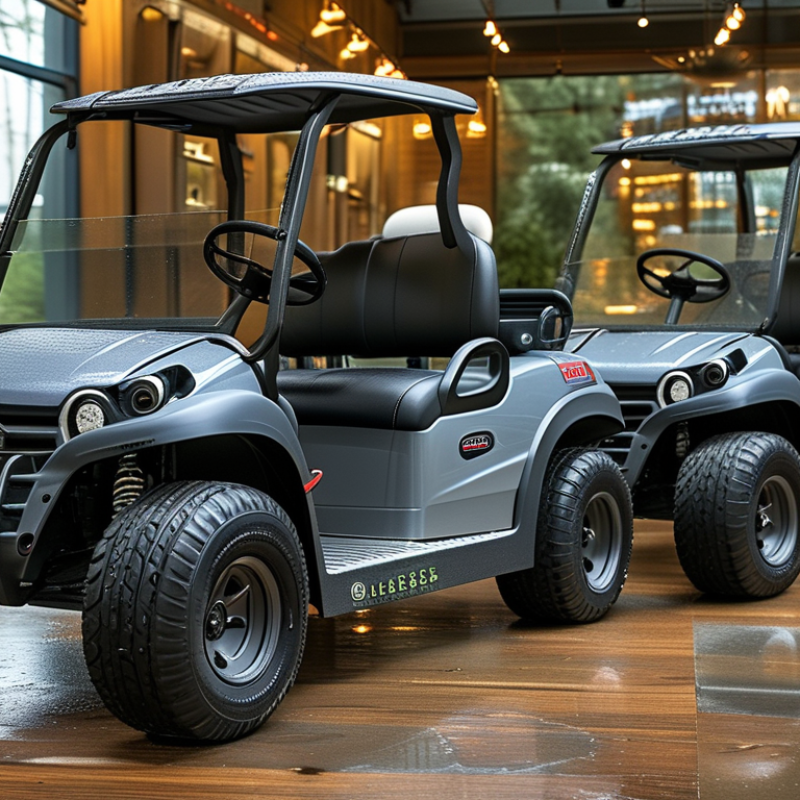
A golf cart sound bar is a compact audio unit designed for open vehicles. It usually combines speakers, an amplifier, Bluetooth connectivity, and a rechargeable or vehicle-powered battery. Unlike home audio equipment, it must handle vibration, wind, dust, and changing outdoor temperatures.
When a phone sends music through Bluetooth, the sound bar receives the digital signal wirelessly. Its amplifier increases the signal’s power, then drives the internal speakers. Many models include volume controls, USB charging, and hands-free functions. Installation may use clamps, brackets, or a wired connection to the cart’s electrical system. Check voltage compatibility carefully. A wrong connection can damage the unit or drain the cart battery.
Tips: Test pairing before mounting the unit. Keep the sound bar away from direct spray, even when it is labeled weather-resistant. Measure the cart’s roof space first. In practical use, louder is not always better; excessive volume can distort music and disturb nearby players. Battery performance also changes in cold weather. Some advertised features sound impressive, but their real value depends on your route, climate, and riding time. Personally, I would inspect the wiring twice, because a neat installation can still hide a weak connection.
| Buying Dimension | What It Is | How It Works or Typical Data | What Global Buyers Should Check |
|---|---|---|---|
| Product Definition and Operating Principle | |||
| Golf Cart Sound Bar | A compact, all-in-one audio system designed to attach to a golf cart, utility vehicle, or similar open vehicle. | It combines speakers, an amplifier, wireless or wired audio input, controls, and a protective enclosure in one housing. | Confirm that the enclosure size, mounting method, and power connection are suitable for the specific cart. |
| Audio Signal Path | The route followed by music or other audio from the source to the speakers. | Audio is sent from a phone or media player through Bluetooth or an auxiliary input, processed by the amplifier, and converted into sound by the speaker drivers. | Check wireless range, input compatibility, pairing procedure, and whether an auxiliary cable is included. |
| Speaker Configuration | The number and type of speaker drivers inside the sound bar. | Common designs use two full-range drivers, often supported by passive radiators or a separate low-frequency driver for stronger bass. | Two full-range drivers are generally suitable for personal listening; larger systems may provide wider coverage in open areas. |
| Amplifier Output | The electrical power used to drive the speakers. | Portable and cart-mounted models commonly fall within approximately 20 to 100 watts RMS. RMS is more useful for comparison than short-term peak power. | Prefer a clearly stated RMS rating and avoid comparing products using peak power alone. |
| Sound Coverage | The area in which music can be heard at a practical listening level. | Coverage depends on output power, speaker sensitivity, enclosure design, mounting height, terrain, and surrounding noise. | For outdoor use, prioritize clear midrange vocals and balanced volume rather than bass specifications alone. |
| Power and Battery Performance | |||
| Cart Voltage Compatibility | The DC voltage supplied by the golf cart or vehicle. | Many sound bars accept 12 V DC. Some models support a wider input range, such as 12–24 V DC, through an internal regulator. | Measure or verify the cart's accessory output before connection. Do not connect a 12 V-only product to a higher-voltage source. |
| Built-In Battery | An internal rechargeable battery that allows operation without a direct cart connection. | Typical battery capacities are approximately 2,000–10,000 mAh. Playing time often ranges from about 4 to 20 hours depending on volume and lighting use. | Ask whether the stated runtime is measured at low, medium, or maximum volume and whether lights are included in the test. |
| Charging Method | The way the internal battery is recharged. | USB-C charging is increasingly common. Charging time is often about 2–6 hours, depending on battery size and charger output. | Check charger voltage, cable type, charging indicator, and whether charging is possible while the unit is playing. |
| Standby Power Draw | The energy consumed when the sound bar is connected but not actively playing. | Low standby consumption helps reduce drain on the cart battery, although the exact figure varies by power-management design. | Choose an automatic sleep or power-off function for carts that remain parked for long periods. |
| Connectivity and Controls | |||
| Bluetooth Audio | A short-range wireless connection between the sound bar and a compatible source device. | Most current products use Bluetooth for music streaming. Practical open-area range is commonly around 10–30 metres, depending on obstacles and interference. | Check supported Bluetooth version, pairing memory, reconnection behavior, and whether a phone can remain in a pocket or storage compartment. |
| Auxiliary Input | A wired analog input, usually using a 3.5 mm audio connector. | It provides an alternative when wireless pairing is unavailable or when lower wireless latency is preferred. | Confirm whether the port has a waterproof cover and whether the product includes the required cable. |
| USB Port | A port used for charging, playback, or both, depending on the design. | Some USB ports provide power output for small devices, while others are intended only for charging the sound bar. | Verify the port's output current and file-playback capability instead of assuming every USB port supports music playback. |
| Control Interface | Physical buttons or a remote control used to operate the sound bar. | Typical controls include power, volume, track selection, source selection, and play/pause. Some models also include a wired handlebar controller. | Large, tactile buttons are easier to use while driving slowly. Confirm whether the remote is weather-resistant. |
| Durability and Outdoor Protection | |||
| Ingress Protection Rating | A standardized rating describing resistance to dust and water. | IP65 indicates dust-tight protection and resistance to water jets. IP67 adds temporary immersion protection under specified test conditions. | For outdoor cart use, look for at least IPX5 water-jet resistance; do not interpret water resistance as protection against every type of weather exposure. |
| UV and Corrosion Resistance | Protection against sunlight, humidity, salt air, and temperature-related material degradation. | UV-stabilized plastics, coated metal fasteners, sealed connectors, and corrosion-resistant grilles can improve service life. | Coastal buyers should confirm salt-air suitability and rinse exposed surfaces with fresh water after use when appropriate. |
| Operating Temperature | The ambient temperature range in which the product is designed to function. | Many outdoor electronic products specify a range near 0–40°C, while some are designed for wider conditions. | Check the manufacturer's stated range for hot climates, winter storage, and charging conditions. |
| Enclosure Material | The material protecting the electronics and speaker drivers. | Common choices include impact-resistant polymer housings, aluminum components, stainless-steel grilles, and rubberized control covers. | Consider impact protection, weight, heat dissipation, and resistance to vibration on uneven paths. |
| Installation and Vehicle Compatibility | |||
| Mounting Method | The hardware used to secure the sound bar to the cart. | Typical options include adjustable clamps, brackets, straps, or dedicated overhead supports. Clamp systems commonly fit tubing approximately 25–50 mm in diameter, but compatibility varies. | Measure the cart's roof supports or mounting tubes and verify clearance for cables, seats, mirrors, and the roof structure. |
| Product Dimensions | The physical length, height, and depth of the sound bar. | Many cart sound bars are approximately 700–1,100 mm wide, 100–220 mm high, and 100–200 mm deep. | Leave sufficient space for brackets, cable bends, ventilation, and passenger head clearance. |
| Product Weight | The mass added to the cart. | Compact units often weigh around 2–6 kg, while larger systems with batteries and reinforced brackets can weigh more. | Check roof-support capacity and distribute the load evenly to avoid vibration or movement. |
| Wiring and Fuse Protection | The electrical connection between the sound bar and the vehicle power system. | A fused positive lead, suitable wire gauge, secure ground, and protected connectors help reduce the risk of short circuits or voltage damage. | Use an appropriately rated fuse close to the power source and follow local electrical installation requirements. |
| Vibration Management | Measures that reduce movement, rattling, and impact transfer during driving. | Rubber spacers, locking fasteners, reinforced clamps, and correctly tightened brackets help isolate vibration. | Recheck all fasteners after the first few rides and avoid mounting where the enclosure contacts hard roof components. |
| Global Purchasing and Compliance Checks | |||
| Input and Charging Standards | Electrical requirements for the target market. | USB chargers and external power adapters may use different plug shapes and regional mains specifications, while the sound bar itself may operate on low-voltage DC. | Confirm the included adapter's input range, plug type, output rating, and required certification for the destination country. |
| Wireless Regulation | Local rules governing radio-frequency devices such as Bluetooth equipment. | Wireless products may require market-specific conformity or radio approvals even when the audio hardware is otherwise identical. | Request applicable conformity documentation for the destination market before importing commercial quantities. |
| Documentation and Accessories | The information and hardware supplied with the product. | A complete package may include mounting hardware, power cable, charging cable, remote control, user manual, and wiring instructions. | Check manual language, wiring diagrams, spare parts availability, warranty terms, and packaging protection for international shipment. |
| Recommended Selection Profile | A practical specification target for general outdoor golf cart use. | 20–100 W RMS IPX5 or higher 12 V or compatible DC input 4–20 h battery runtime | Prioritize correct voltage, secure mounting, weather protection, clear controls, and documented compliance over maximum advertised volume. |
Technical note: The numerical values shown are typical market ranges or commonly used specifications for golf-cart and outdoor portable audio products. Actual performance depends on product design, installation, climate, volume level, battery condition, and vehicle electrical configuration. Always verify the final product specification before purchase or installation.
It is a compact audio unit for open vehicles. It combines speakers, an amplifier, wireless pairing, and power options.
Your phone sends a wireless audio signal. The amplifier strengthens it, then drives the internal speakers.
Measure the roof clearance and mounting rails before installation. Keep mirrors, lights, and emergency controls fully visible.
Confirm voltage compatibility before connecting the unit. A wrong connection can damage equipment or drain the cart battery.
No. An IPX5 rating can help with rain and light washdown exposure. Keep charging ports covered and avoid direct spray.
Test pairing before mounting the unit. Keep the antenna area clear and avoid nearby sources of interference.A wired backup input can help.
Wipe salt, dust, and sunscreen from the grille weekly. Inspect clamps after the first few rides, then monthly.
No. Excessive volume may distort music, disturb nearby players, and reduce battery range.
Cold temperatures can reduce battery performance. Battery chemistry, age, voltage, and riding time also influence the result.The advertised figures may not match every route.
This guide explains what a Golf Cart Sound Bar is and how it delivers music, announcements, or other audio from a compact system designed for golf carts and similar vehicles. It reviews the key features buyers should compare in 2026, including speaker configuration, Bluetooth connectivity, control options, sound clarity, maximum output, battery capacity, charging time, and energy efficiency. Special attention is given to balancing audio performance with the cart’s available power and the expected duration of use.
For global buyers, the guide also highlights weather resistance, secure installation, safe operating practices, and compatibility with different voltage, charging, and wireless requirements. It outlines practical advice for mounting, cable protection, cleaning, storage, and routine maintenance in outdoor environments. Finally, it covers important purchasing considerations such as product specifications, included accessories, warranty terms, shipping conditions, local compliance requirements, and after-sales support, helping readers choose a reliable and suitable Golf Cart Sound Bar for recreational or commercial use.

 Hisound carAudio