A Waterproof ATV Sound Bar has to do more than survive a splash. It needs to stay secure over rocky trails, play clearly above engine noise, and remain easy to control with gloved hands. Some models promise rugged protection, but labels alone cannot show how a speaker handles vibration, mud, or repeated washdowns. Real use is messier.
ATV audio specialist Alex Mercer offers a practical rule: “Water resistance matters, but a solid mount and clear controls matter just as much.” Look for a clearly stated IP rating, corrosion-resistant hardware, and mounting brackets that fit your roll cage. Check whether buttons are reachable from the seat and whether Bluetooth pairing stays stable outdoors. A waterproof rating does not automatically mean a sound bar can be submerged. Small distinction. Important one.
This guide compares leading ATV sound bars by weather protection, sound quality, installation, and everyday usability. It also considers details that are easy to overlook, such as clamp movement on uneven ground and whether bass remains audible at trail speed. Manufacturer specifications help, but they do not replace long-term field testing. That is a limitation worth admitting. The right choice depends on your vehicle, riding conditions, and budget—not just the biggest power rating.
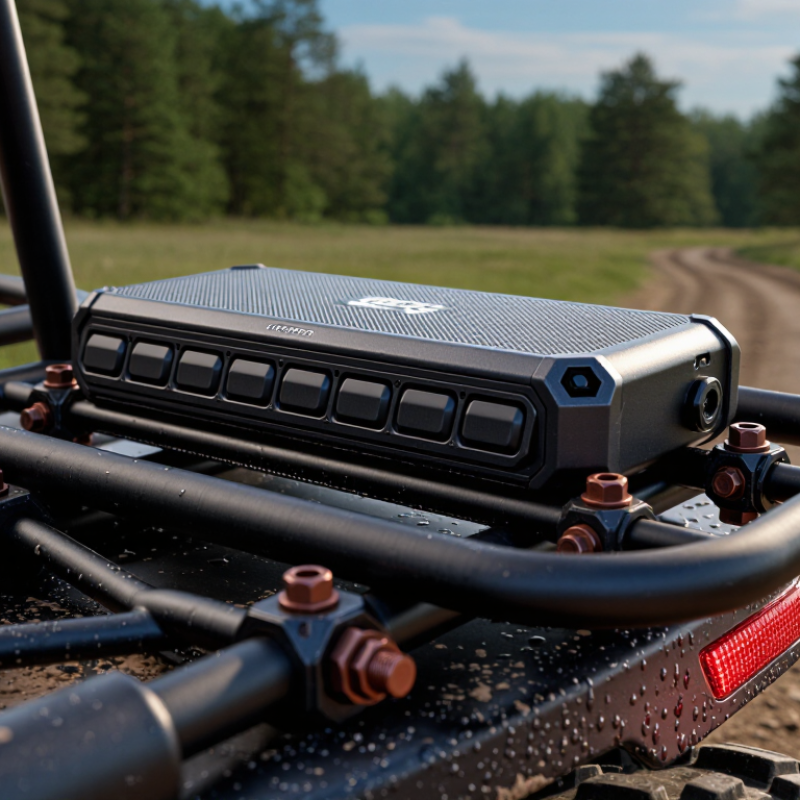
An ATV sound bar is a compact audio system, not just a row of speakers. Drivers turn electrical signals into sound, while an internal amplifier boosts those signals using power from the vehicle’s 12-volt system. Short, sealed wiring runs help limit exposure to mud and spray. Still, vibration can loosen connections over time.
Water resistance needs a precise reading. IEC 60529 defines IPX7 testing as temporary immersion in up to one meter of water for 30 minutes. That rating does not mean a sound bar can withstand pressure washing, salty water, or repeated deep submersion. Check the full product rating and installation instructions. A sealed housing is only part of the system.
Power matters, too. At high volume, an amplifier draws more current, and a weak connection can cause voltage drop or intermittent sound. SAE J1455 provides environmental test guidance for vehicle electronics, including vibration and temperature exposure. In practice, mount the bar firmly, keep connectors protected, and leave room for airflow around the amplifier. Small details count. One overlooked ground point can spoil an otherwise solid setup.
| Feature | Typical Information | What to Check |
|---|---|---|
| Water protection | Models may state an IP rating such as IPX5, IPX6, or IPX7. Under IEC 60529, these ratings describe tested water exposure: water jets for IPX5 and IPX6, and temporary immersion for IPX7. | Choose a rating suited to expected rain, spray, and washing. An IPX rating does not indicate dust protection; the “X” means no dust rating is specified. |
| Speakers | A sound bar combines multiple speaker drivers in one enclosure. Driver size, number, and layout vary by model and affect the sound profile and enclosure size. | Look for clear information about driver configuration and weather-resistant materials; speaker size alone does not determine sound quality. |
| Built-in amplifier | The integrated amplifier powers the speakers from the vehicle’s electrical system, so a separate home-style receiver is generally not needed. | Compare continuous (RMS) output where available. Peak or “maximum” wattage is not directly comparable to RMS output. |
| Vehicle power | Many ATV sound bars are designed for a 12-volt DC vehicle electrical system and connect to a battery or an accessory power circuit. | Check the unit’s voltage and wiring requirements against the ATV manual. Use the specified fuse and a suitable, protected connection. |
| Power consumption | Current draw depends on amplifier design, listening level, and music. Electrical power can be estimated with P = V × I, but audio output ratings do not equal battery input draw. | Review the specified current draw and consider battery capacity and charging-system limits, especially during extended use with the engine off. |
| Wireless audio | Bluetooth is commonly used for wireless playback from a compatible phone or media player. Connection distance varies with device, obstacles, and interference. | Check Bluetooth version, pairing controls, and whether the unit also offers a wired input or other playback options. |
| Mounting and vibration | A sound bar is typically secured to a handlebar, roll cage, or other compatible mounting point using brackets or clamps. | Measure the mounting location, confirm clamp compatibility, and secure wiring away from moving or hot parts. |
| Controls and usability | Controls may include buttons on the enclosure, a wired remote, or playback controls through a connected device. | Consider whether controls are reachable while parked and usable with gloves; follow safe riding practices when adjusting audio. |
The vehicle’s 12-volt system powers an internal amplifier. The amplifier boosts electrical signals sent to the speakers.
It describes temporary immersion in up to one meter of water for 30 minutes. Not a guarantee against every wet ride.
No. IPX6 tests powerful water jets under controlled conditions, at roughly 100 liters per minute. A close pressure washer may exceed that test.
No. They describe different water tests. Check the documentation for both ratings if your rides involve jets and immersion.
Yes. ATV vibration can loosen connections over time, causing intermittent sound. Check the plugs and mounting points after installation.
The amplifier draws more current at high volume. A weak connection may cause voltage drop or cutouts.
Mount it firmly, protect the connectors, and leave space around the amplifier for airflow. Small details matter.
Not necessarily. Water can collect around an improperly sealed plug, even when the housing has a rating. I may be overcautious, but I would inspect the seals after wet rides.
Choosing a Waterproof ATV Sound Bar means looking beyond volume alone. These systems combine speakers, an amplifier, and a connection to the vehicle’s 12-volt power supply, so check that the unit is compatible with your ATV and that its mounting dimensions suit the available space. Compare RMS power, speaker size, and frequency response to understand how the sound may perform outdoors, where engine noise and open terrain can affect listening.
Water-resistance ratings help indicate how a sound bar handles wet conditions. IPX6 testing uses powerful water jets, while IPX7 testing involves temporary immersion in up to one meter of water under specified conditions; neither rating means every installation or control is equally protected. Also consider Bluetooth range, enclosure materials, accessible controls, and how easily the unit can be inspected or serviced after trail use. Together, these details help you select a practical sound bar for your riding environment.

 Hisound carAudio