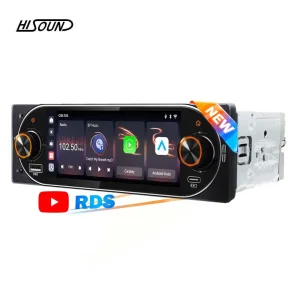
Direct from our state-of-the-art Chinese manufacturing facilities. Fully certified and customizable dashboard units built to international standards.
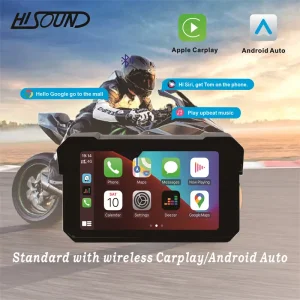
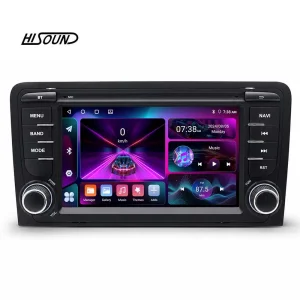
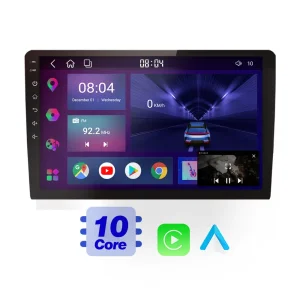
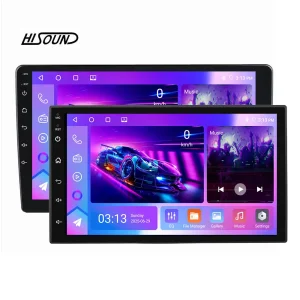
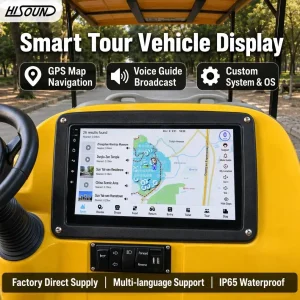
The Evolution of In-Vehicle Infotainment (IVI) from Simple MP3 Units to Edge-Computing Platforms
The global automotive market is undergoing a rapid transition toward digital cockpits. What was once defined merely as a "universal car MP3 player" has evolved into a sophisticated, multi-platform In-Vehicle Infotainment (IVI) gateway. For global automotive buyers, importers, and brand distributors, sourcing from Chinese manufacturers is no longer just about optimizing unit costs; it is about establishing a secure partnership with engineering pioneers who can deliver technological innovation, reliable localization, and robust supply chain resilience.
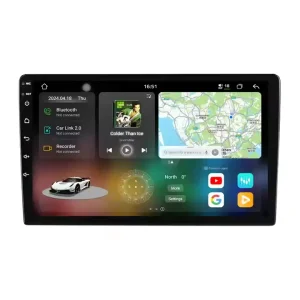
Currently, the market demands a bifurcation of solutions: simple, reliable Linux/MP5 players that deliver instant boot times and budget-friendly integration, alongside high-performance Android 13/15 Octa-Core units capable of executing high-end navigation, wireless screen-mirroring (CarPlay & Android Auto), and secondary vehicular diagnostic inputs. China stands at the center of this industrial cluster, offering unparalleled proximity to primary semiconductor suppliers, display module manufacturers, and precision plastic injectors. This integration enables rapid prototyping, rigorous testing under the automotive-grade standards, and unmatched time-to-market speeds.
Comprehensive Architectural Analysis of Next-Generation Hardware Frameworks
Deploying automotive-grade Octa-Core processing clusters (up to 2.7GHz architectures) ensuring continuous operation without thermal throttling under direct sunlight exposure.
Utilizing high-brightness, 2.5D fully laminated screens (up to 1000 nits) with anti-glare coatings, designed to maintain complete legibility in open-cockpit applications.
Embedded 4G LTE, high-speed dual-band WiFi, and dual-Bluetooth chips providing parallel communication paths for wireless CarPlay, Android Auto, and local sensor data.
Intelligent power IC designs with reverse-polarity protection, integrated heat-sink modules, and low-power standby modes to prevent vehicle battery drain.
How Hisound Partners Turn Bespoke Requirements into Mass-Produced Realities
A true universal solution is never one-size-fits-all. Real customization requires deep integration across multiple levels: physical hardware, core operating system kernels, application software, and branding. Hisound operates a streamlined system design flow that bridges the gap between customized prototypes and scale manufacturing:
Our collaborative process begins with an in-depth analysis of vehicle requirements: cabin layout, power dynamics, operational environments, and interface configurations (CAN-Bus, wiring harnesses, physical mounts).
Using 3D CAD modeling and advanced rapid prototyping tools, our engineers construct functional design samples. These models undergo testing for structural tolerance and signal integrity.
Once prototypes receive client sign-off, production transitions to our SMT lines and assembly units. Every device undergoes functional evaluation, aging cycles, and safety checks.
Our OEM/ODM services are designed to address the detailed structural needs of modern automotive projects:
Multi-Vehicle Optimization Strategies for Real-World Environments
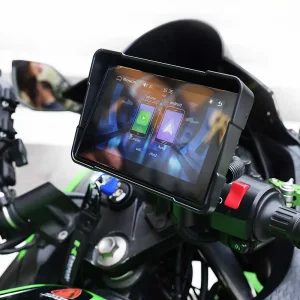
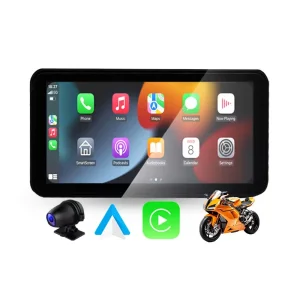
Featuring specialized IP68/IPX8 waterproofing, high-brightness anti-reflective panels, glove-compatible capacitive touch matrices, and dual-Bluetooth channels for helmet intercom connectivity.
Engineered for high vibration tolerance, wide DC voltage input compatibility (12V–72V), integrated GPS mapping for resorts, and 4G connectivity for real-world fleet telemetry.
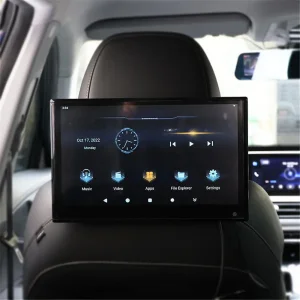
Delivering high-definition rear-seat entertainment displays, integrated multi-zone audio streaming, dash-cam recording loops, and OEM-matched dashboard styling.
Underpinning OEM Reliability via Advanced Environmental Simulation Laboratories
A reliable supplier must guarantee long-term performance under harsh, fluctuating environments. At Hisound, every product batch undergoes a series of physical validation tests prior to dispatch:
Eliminating Regulatory Risks for Distributors and Retail Networks Worldwide
For international buyers, navigating local regulatory requirements is essential for smooth customs clearance and market compliance. Hisound ensures all universal car MP3 and Android player lines are designed, tested, and certified to meet regional standards:
Our systems comply fully with CE Mark directives (EN 55032/35 for EMI compatibility) and the RoHS Directive, ensuring restricted use of hazardous substances in all solder and plastic elements.
Our wireless models comply with FCC Part 15 regulations, governing RF emissions and Bluetooth/WiFi signal patterns to prevent interference with other electronic devices.
Common Technical and Commercial Inquiries Resolved by Our Product Engineering Team
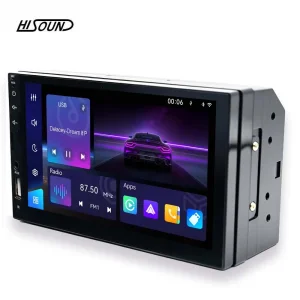
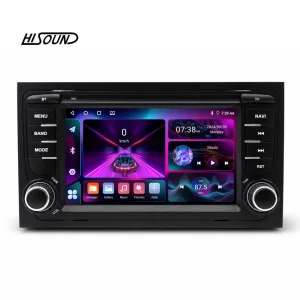
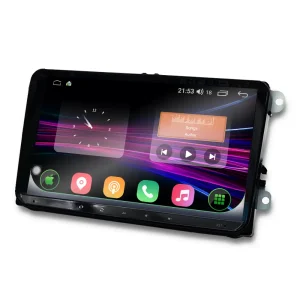
Complete your sourcing analysis with our core vehicle multimedia players. High compatibility across global platforms.
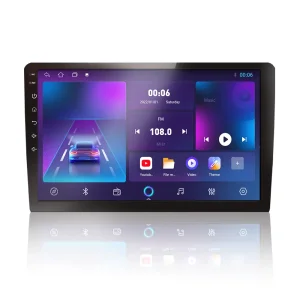
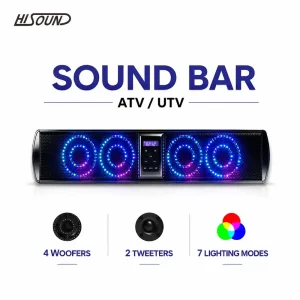
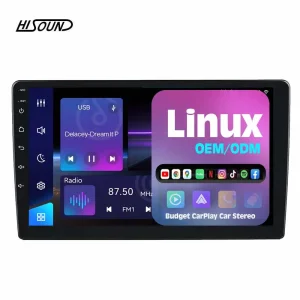
 Hisound carAudio