Years of Manufacturing Growth
Group Founding Year
Global Safety Accreditations
Premium Waterproof Standards
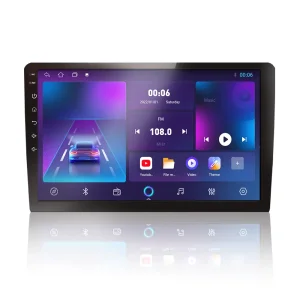
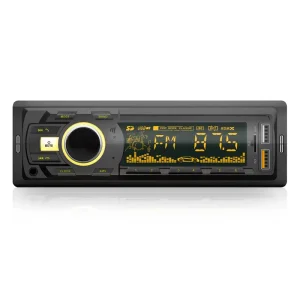
The global automotive supply chain is undergoing a critical structural transformation. Fleet operators, importers, and Tier-1 procurement offices no longer look at vehicle hardware through a simple component sourcing lens. Modern vehicle platforms require the integration of complex digital ecosystems directly into the dashboard. As a leading bulk order manufacturer exporter and factory, Hisound (founded in 1979 with over 44 years of research and production lineage) has built the comprehensive infrastructure required to design, test, and scale advanced screen and audio modules globally.
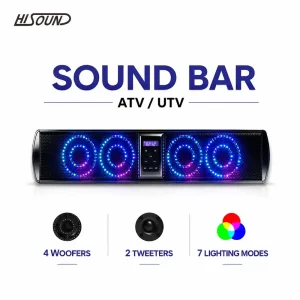
From the initial establishment of our specialized automotive division to the launching of the brand REFINE Rui feng in 2004, our design roadmap has run parallel to the digitization of global transport systems. Whether managing high-volume distribution for passenger car systems or supplying resilient infotainment modules for golf carts, marine crafts, or powersport ATVs, the benchmark for manufacturing success remains centered on precision, low-latency firmware deployment, and rugged hardware architecture.
Commercial vehicle systems and specialized logistics platforms face extreme operating conditions. Procurement directors are faced with distinct challenges when securing reliable bulk supplies: component longevity, hardware compatibility, and consistent quality yield across multi-thousand unit orders. A failure in a batch of dashboard monitors or media hubs can ground entire fleets or lead to costly consumer product recalls. Our manufacturing processes mitigate these risks by integrating custom PCB designs with selected high-grade capacitors and processors capable of operating under extended temperature profiles.
| Requirement Category | Enterprise Sourcing Challenge | Hisound Integrated Factory Solution |
|---|---|---|
| Hardware Resiliency | High thermal load and extreme vibration degrade standard consumer electronics. | Automotive-grade structural design, comprehensive thermal routing, and physical vibration dampening. |
| Protocol Integration | Interfacing with legacy CAN-Bus networks and proprietary vehicle controls. | Custom digital decoder boards and tailored CAN-Bus software stacks written to target system specifications. |
| Long-term Lifecycle | Silicon obsolescence requires frequent engineering redesigns. | Standardized footprints and component lifecycle guarantees, securing long-term parts availability. |
Our industrial production capabilities cover everything from initial physical prototyping to mass-scale assembly. Unlike basic assembly lines, our cleanrooms use automated optical bonding systems to connect the touch screen, polarizing filter, and glass panels. This process removes the internal air gap that causes glare and condensation in humid environments.
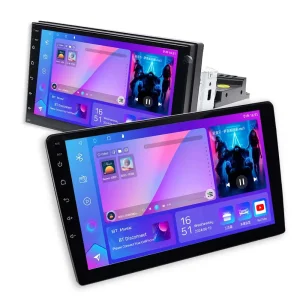
Our software stack, running on stable Android 12, 13, and next-generation Android 15 platforms, is modified at the kernel level. This allows for deep brand styling, locking down key settings for fleet management, and implementing secure, partitioned Bluetooth connections to handle passenger audio and vehicle diagnostic systems at the same time.
Modify screen size, target resolution, outdoor brightness levels, physical touch matrix structures, IP-rated waterproof chassis, and mounting points to seamlessly integrate with specialty vehicles.
Customize dynamic mapping layers, interface layouts, localized audio feedback, offline route optimization algorithms, and backend telemetry protocols for specialized fleets.
Deploy specialized mounting hardware, heavy-duty automotive wiring systems, and custom CAN-bus transceivers tailored specifically for golf carts, utility ATVs, and marine systems.
Apply custom industrial logos, design specialized boot animations, configure targeted user interface skins, and develop custom product packaging with direct support from engineering groups.
Project Specifications
Hardware/Software Design
Prototype Validation
Bulk Manufacturing
Choosing an overseas manufacturing partner requires balancing cost-efficiency with uncompromising reliability. In the high-stakes automotive and motorcycle accessory industry, quality issues can quickly erase shipping margins. Over our 44 years of operations, we have built a manufacturing ecosystem designed to provide long-term stability for our partners.
Our facility runs automated, multi-stage testing processes, subjecting all batches of motorcycle navigation systems and rear-seat monitors to continuous aging testing. We use high-precision testing systems to simulate over five years of harsh road use, including intense sunlight, chemical cleaners, salt spray, and vibration.
We work directly with distributors, logistics companies, and e-commerce platforms, offering flexible packaging configurations, custom laser-etched branding, and direct shipping logistics.
We use high-grade structural foam bonding and computerized pressure-relief chambers to ensure dustproof and waterproof integrity.
Patented quick-disconnect power bases with integrated dashcam DVR routing, keeping components safe and simplifying installation.
Our displays feature up to 1000 nits of brightness combined with 2.5D curved glass, maintaining visibility under direct, intense sunlight.
The pace of automotive digital development is accelerating. Over the next five years, display technology will move past basic mirroring systems. Our factory's long-term research is focused on three main technology paths:
Moving from quad-core architectures to fast 10-core processing platforms. This transition supports real-time computer vision processing, AI-driven navigation suggestions, and voice processing directly on the device, minimizing dependence on cloud connections.
Integrating telemetry modules directly into head units. This enables commercial operators to monitor vehicle health, fuel consumption, speed, and location metrics using unified API endpoints.
Designing receiver chips ready for Vehicle-to-Everything (V2X) communications, allowing displays to warn drivers of upcoming traffic flows, weather hazards, and localized warning networks.
Quality reliability cannot be achieved through visual inspection alone. We validate every production run using a structured machinery line, ensuring physical and electrical stability before packaging:
We use automated structural adhesive dispensers to apply specialized foam bonding materials under controlled pressures. Completed assemblies then undergo testing in high-pressure water spray and submersion chambers. This ensures each unit meets the IPX8 standard, providing long-term protection against heavy rain, dust, and washdowns.
Our displays use ultraviolet (UV) blocking filters and optical-grade adhesives. This prevents discoloration, delamination, and air bubble formation, ensuring screen clarity even under high temperatures and constant direct sunlight.
We provide full hardware customization, including custom brackets, reinforced wiring harnesses, and wide-range power regulators (supporting 12V to 72V systems). We also offer software customization to lock configurations, display custom navigation maps, and customize launcher interfaces.
All exported infotainment systems carry CE, FCC, and RoHS certifications. We also comply with ISO quality standards, ensuring our products meet safety, emissions, and environmental requirements for global distribution.
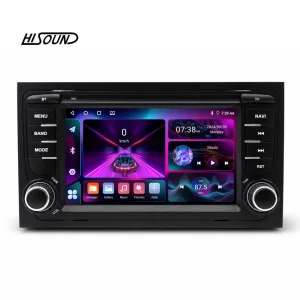
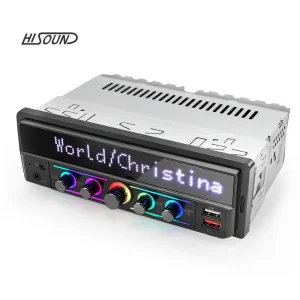
 Hisound carAudio