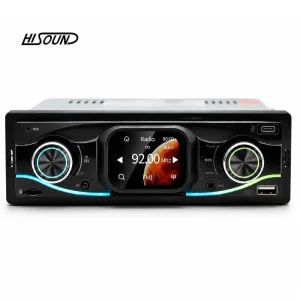
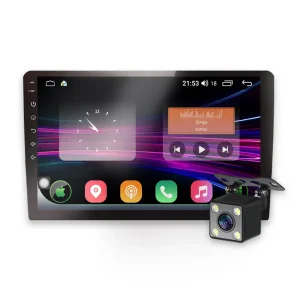
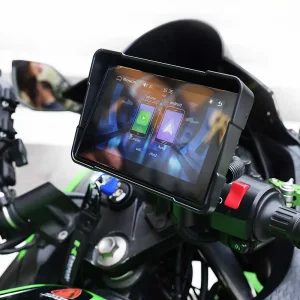
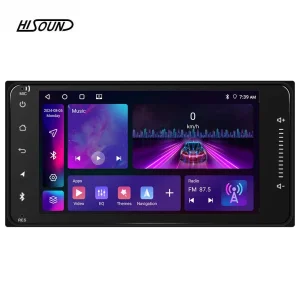
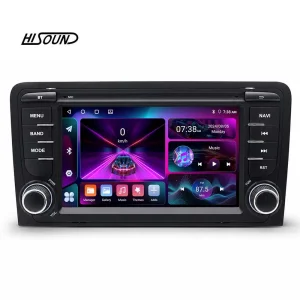
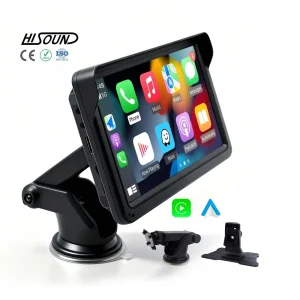
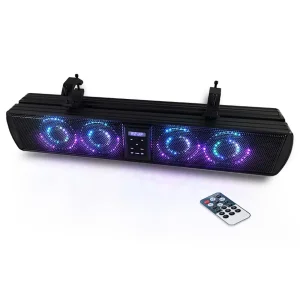
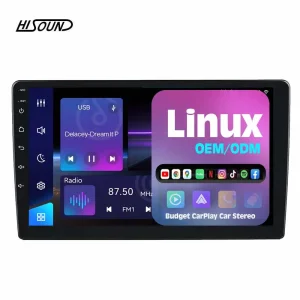
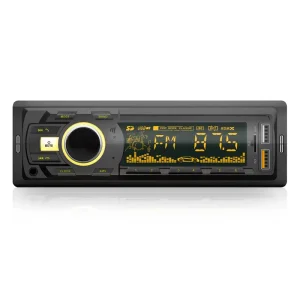
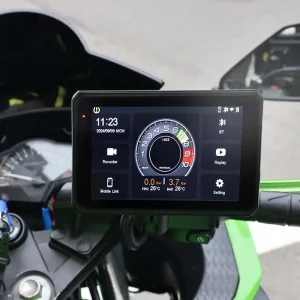
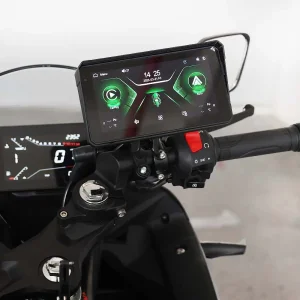
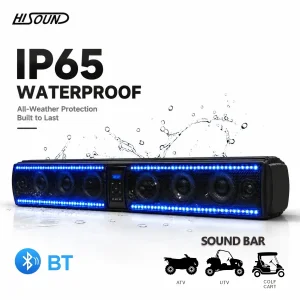
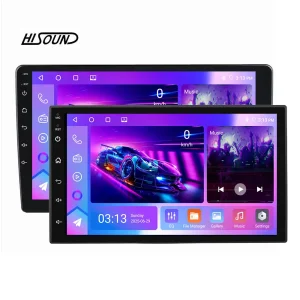
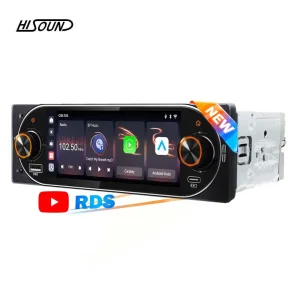
The fleet management and golf cart sectors are undergoing a massive technological revolution. The days of simple analog battery needles and rudimentary dials are long gone. Today's commercial resorts, golf clubs, private communities, and industrial operations demand integrated telemetry, navigation, and infotainment dashboards. The core of this system is the golf cart LCD screen.
As manufacturers transition these vehicles into Low-Speed Utility Vehicles (LSVs) and personal transport micro-mobility platforms, requirements for rugged displays have skyrocketed. Display assemblies must withstand extreme outdoor conditions—ranging from freezing mornings on East Coast courses to blistering desert afternoons in Arizona golf communities. This global commercial demand forces procurement leads to work directly with professional display manufacturers who understand industrial-grade display physics, optical performance, and communication protocols.
Standard consumer screens fail rapidly when placed outdoors. Ambient daylight, moisture intrusion, and physical vibrations quickly destroy lower-tier panels. To guarantee field reliability, our screens are engineered to meet specific rugged metrics:
| Technical Parameter | Standard LCD Panels | Hisound Rugged LCD Screens | Primary Engineering Benefit |
|---|---|---|---|
| Luminance (Brightness) | 250 - 450 Nits | 800 - 1200+ Nits | Maintains crystal clarity in direct sunlight (Sunlight Readable) |
| Lamination | Air Bonding | OCR/OCA Optical Lamination | Eliminates internal fogging and dramatically improves impact resistance |
| Operating Range | 0°C to 50°C | -30°C to +85°C | Reliable boot-ups and display refresh rates in extreme seasons |
| IP Grade | None / Low IP | IP67 / IP68 Front Cover | Withstands pressure washers, heavy rainstorms, and dust clouds |
| Touch Panel | Resistive / Thin Glass | 2.5D Toughened IK08 Cover Glass | Capacitive multi-touch usable with wet fingers or gloves |
We employ advanced Optical Bonding (OCR/OCA) technology. By filling the air gap between the outer cover glass and the LCD cell with specialized refractive-index-matched optical resins, we eliminate internal reflections. This decreases ambient light reflection by up to 90%, preserving contrast ratios and ensuring the user can easily read speed, GPS direction, and course layout metrics under direct vertical solar rays.
A premium display is more than just a screen—it acts as a vehicle gateway. Our panels are built to integrate directly with motor controllers (such as Curtis, Inmotion, and Navitas) via CAN-Bus (J1939 protocols) or RS-485 interfaces. This allows developers to display real-time diagnostics, state of charge (SoC), thermal alerts, odometer logs, and fault codes on customized UI screens.
Define your vehicle application, display size (5", 7", 9", or 10.1"), daylight visibility targets, connection interfaces, waterproof housing structure, and custom branding needs.
Our experienced electronics engineering team customizes the schematic, PCB routing, custom wiring harness layouts, housing molds, and tailored firmware/UI designs.
We assemble prototype units and perform environmental stress testing, including thermal chamber cycling, dust chamber ingress, vibration tables, and optical metrics verification.
Once validated, we transition the project to mass assembly utilizing Class 1000 optical cleanrooms and automated SMT lines, backed by long-term warranty and supply cycle guarantees.
The global display supply chain is centered heavily around South China's high-tech industrial hubs. For procurement departments globally, importing from a specialized Chinese factory provides concrete commercial advantages that are difficult to replicate elsewhere:
From LCD glass slicing and driver IC packaging to polarizer printing, backlight assembly, and tooling factories, the physical proximity of raw materials ensures rapid prototyping cycles. Design revisions that typically take months in other regions can be successfully designed, prototyped, and tested within weeks in our facility.
By investing in high-precision Yamaha SMT placement systems, optical alignment inspection stations (AOI), and fully dust-free optical lamination lines, we achieve highly repeatable assembly yield rates. This automation minimizes human error, providing consistent product quality from the first demo sample to a production run of 10,000 units.
Our global shipping scale allows us to source core materials like premium glass panels, automotive microcontrollers, and optical-grade glues at bulk rates. These savings are passed directly to our OEM/ODM distributors, offering a competitive pricing strategy without compromising the quality of the raw displays.
Depending on the target market, golf cart display platforms require unique software configurations and structural mounts. Our panels adapt perfectly across several market segments:
Displays integrate with digital 2D/3D course maps, dynamic yards-to-green indicators, remote geo-fencing speed restrictions, electronic food and beverage ordering systems, and real-time battery status alerts.
For street-legal LSVs, the screen functions as an advanced infotainment terminal. It supports dual Bluetooth, hands-free calling, built-in GPS mapping, reverse cameras, FM/AM audio playback, and Apple CarPlay or Android Auto integration.
Tough screens display cargo weights, path coordinates, battery thermals, and warnings. These screens are built with impact-resistant cover glass and robust chassis mount brackets to handle heavy commercial use.
Standard LCD screens reflect a high percentage of ambient light and feature low backlight output (typically under 350 nits), washing out contrast. We solve this by engineering our screens with high-brightness LED backlights (800 to 1200+ nits) and utilizing full optical bonding. Optical bonding fills the air gap with a clear adhesive, reducing light reflection by up to 90% and maintaining clarity in bright sun.
Yes. Our display controllers support CAN-bus, RS232, and RS485 communication protocols. They interface with your motor controller and Battery Management System (BMS) to show speed, odometer logs, remaining range, charge state, and temperature readings.
Our screen displays are built to meet IP65 to IP68 rating options. They undergo rigorous testing including high-low temperature cycles (-30°C to +85°C), vibration resistance tests, and humidity exposure to ensure long-term outdoor survival.
Yes. We offer comprehensive OEM/ODM solutions. We can customize physical frames, color-matched mounts, wiring interfaces, customized boot screens, custom user interfaces, and custom package branding.
Standard prototype modifications can be completed and shipped within 2 to 3 weeks. Custom tooling for structural molds and custom board designs generally takes between 4 to 6 weeks, followed by validation and approval steps.
 Hisound carAudio