Explore our advanced OEM and ODM vehicle multimedia platforms featuring industry-leading processing chipsets and customizable system interfaces.
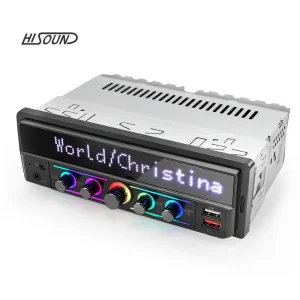
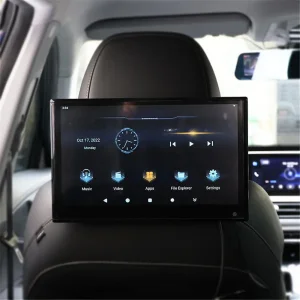
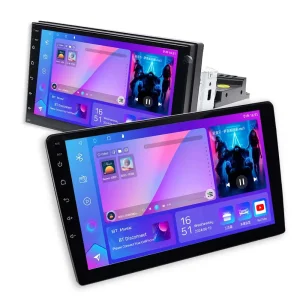
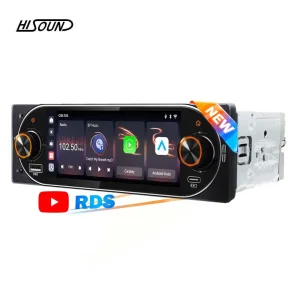
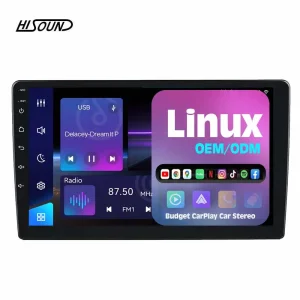
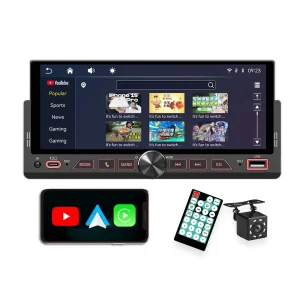
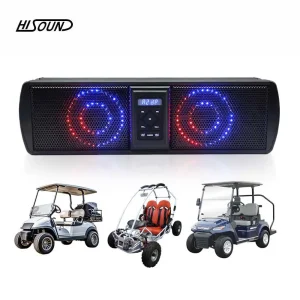
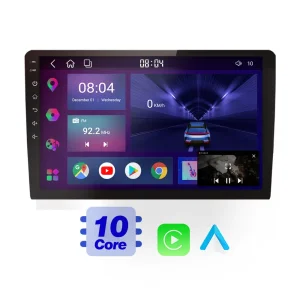
An authoritative industry guide on hardware configuration, supply chain optimization, compliance parameters, and pricing factors for global enterprise procurement teams.
Modern in-vehicle infotainment (IVI) systems have transcended simple radio functions. Today, they serve as the central processing hub of the vehicle dashboard. As a seasoned OEM custom car audio factory, Hisound (established in 1979 with over 44 years of research and production expertise) has navigated the transition from simple analog players to high-performance multi-core Android 15 units. In 2004, the corporate group formally consolidated its automotive electronics arm under the REFINE (Rui Feng) brand, focusing on delivering enterprise-grade hardware reliability combined with customizable operating system shells.
For procurement officers, sourcing custom head units directly from the manufacturer avoids the markup of intermediaries and ensures direct access to the factory’s R&D engineering pool. This direct loop allows the custom design of digital signal processors (DSP), tailored motherboard layouts, custom heat-sink geometries, and specialized CAN-bus decoding parameters to match target vehicle trim configurations.
Customize screen size, active display area, resolution, high-brightness backlighting (up to 1000 nits), touch panel technology (AG/AR/AF coatings), waterproof chassis structures, and tailored mechanical mounting bezels to match target vehicle consoles.
Configure built-in GPS/GNSS receiver modules, customize localized navigation UI skins, integrate regional map packs (offline/online), coordinate voice guidance engines, and build telematics features for fleet managers.
Incorporate customized mounting brackets, custom wiring harness adaptations (ISO, Quadlock, or custom pinning), and vehicle network transceivers (CAN-Bus, LIN, MOST) for specific utility or resort vehicle integrations.
Avail private-label casing, customized boot logos, bespoke launcher styles, customized OS configurations, and structural packaging templates alongside full engineering validation cycles.
Negotiating pricing with an OEM custom car audio factory requires understanding the breakdown of production, customization, and components. Unlike off-the-shelf consumer retail items, custom vehicle electronics pricelists are highly dependent on the chosen chipset, system RAM/ROM ratio, panel lamination tier, and batch quantity (MOQ).
Generally, custom car audio factory pricing is split into two primary categories: Non-Recurring Engineering (NRE) fees (for tooling, custom housing, PCB design modifications, and certifications) and Unit Production Costs. Below is an indicative industry wholesale pricing model for various hardware platforms:
| System Architecture | Core Processor Spec | RAM & ROM Config | Screen Lamination Tier | Est. Factory Unit Price (USD) | Standard OEM MOQ |
|---|---|---|---|---|---|
| Basic MP5 (Linux/RTOS) | Dual-Core ARM Cortex | 512MB RAM + 128MB ROM | Air Lamination IPS | $18.00 - $35.00 | 1,000 units |
| Mid-Tier Linux (CarPlay / Android Auto) | Quad-Core 1.5GHz | 1GB RAM + 8GB ROM | OCA 2.5D Full Lamination | $38.00 - $65.00 | 500 units |
| High-Performance Android 15 Platform | Octa-Core 2.7GHz | 4GB RAM + 64GB ROM | 2.5D Optical Bonding (1000 nits) | $85.00 - $130.00 | 200 units |
| Enterprise 10-Core flagship Solution | 10-Core Deca SoC | 8GB RAM + 128GB ROM | AG Anti-glare Optical Bonding | $140.00 - $210.00 | 100 units |
For complex deployments (e.g., custom rear-seat entertainment centers supporting 4K decoding or integrated marine-grade soundbars), prices fluctuate depending on specific compliance testing, custom housing tooling configurations, and localized vehicle network integrations.
The clustering of electronic component manufacturers in industrial hubs like Shenzhen and Huizhou gives Chinese factories a significant strategic advantage. When working with a Chinese supplier, buyers benefit from a complete, vertically integrated supply chain located within a minimal geographic radius. Key advantages include:
Hisound leverages these regional supply chain advantages to maintain high manufacturing standards while keeping prices competitive for global buyers.
Procuring in-vehicle infotainment systems requires strict compliance with regional safety, electromagnetic, and environment-specific standards. Importing custom electronics that lack proper regulatory certifications can lead to customs holds, distributor penalties, or consumer recalls.
Hisound ensures all vehicle units conform to international standards, providing full support for:
Define application scope, screen dimension, waterproof needs, UI layouts, and pricing goals.
Engineering team designs custom schematics, PCB patterns, housing molds, and CAN-bus code.
Build production samples, run environmental simulations, IPX8 tests, and fitment checks.
Execute volume manufacturing with continuous functional testing, aging cycles, and shipping.
Automotive grade electronics operate in harsh environments, from sub-zero winter temperatures to hot dashboards under direct summer sunlight. Standard consumer-grade tablets will experience thermal shutdown, panel delamination, or component failure under these conditions. A professional car audio factory must implement strict validation testing.
Hisound's internal testing lab uses specialized testing machinery to simulate years of harsh automotive operation before product release:
Simulates continuous driving vibration across multiple axes to ensure solder joint and connector stability, preventing circuit failures over time.
Tests system operation under extreme temperatures (-30°C to +80°C) to ensure boot reliability, display fluid response, and component safety.
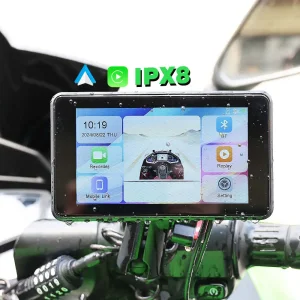
Applies high-pressure water jets to simulate intense rain, checking waterproof seal integrity for motorcycle, UTV, and open-top vehicle systems.
Runs automated touchscreen click cycles (up to 1,000,000 presses) to verify touch sensor durability and capacitive screen life.
In addition to active system testing, Hisound uses Constant Temperature Shrink Packaging Machines to protect finished units against humidity and dust during maritime shipping, ensuring they arrive at customer warehouses in ready-to-install condition.
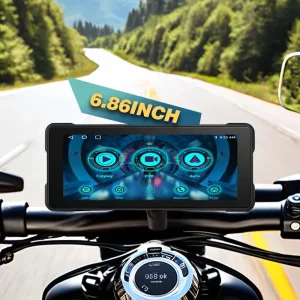
Rugged, waterproof IPX8 infotainment displays designed for motorcycle, ATV, UTV, and custom OEM retrofits.
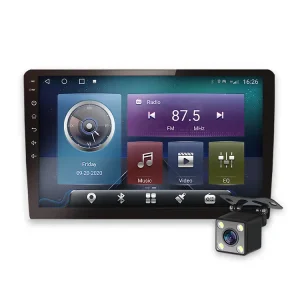
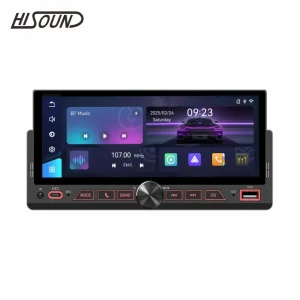
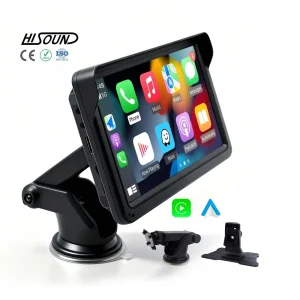
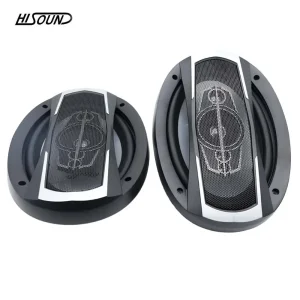
As smart systems become standard in vehicles, several technical trends are shaping the future of custom automotive electronics manufacturing. Understanding these trends helps procurement teams make future-proof purchasing decisions:
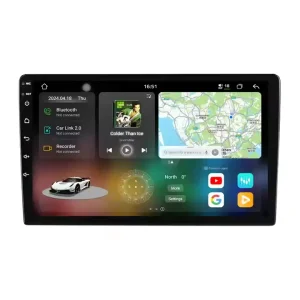
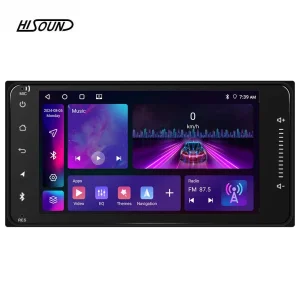
Moving beyond projection interfaces (like basic screen mirroring) to native Android systems that run directly on the head unit, enabling direct vehicle sensor integration and custom apps.
Replacing standard air-gap screen lamination with optical bonding (OCA). This eliminates internal reflections, prevents dust/moisture entry, and ensures screen readability under direct sunlight.
Integrating Advanced Driver Assistance Systems (ADAS), such as lane departure warnings, with DVR cameras directly into the infotainment processor, reducing wiring and system complexity.
Hisound's engineering teams integrate these advanced features into custom designs, providing global buyers with modern, high-performance product solutions.
Answers to common questions regarding wholesale pricing, custom tooling, software development, and quality validation processes.
 Hisound carAudio