Explore our highly integrated vehicle soundbars, floating head units, and rugged motorcycle navigation systems engineered for extreme environments.
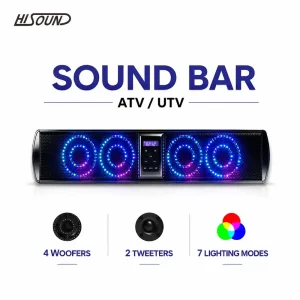
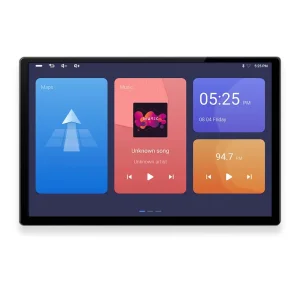
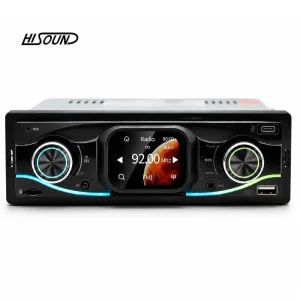
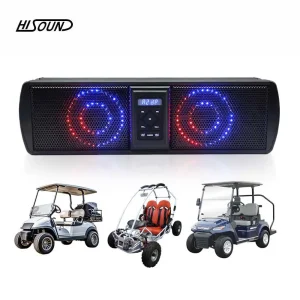


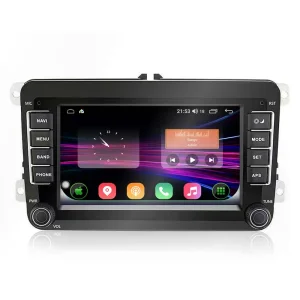
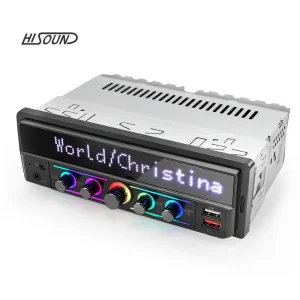
A highly detailed whitepaper on overcoming outdoor attenuation, engine displacement mask, and wind shear through systematic hardware design.
Executive Summary: For off-road vehicles (ATVs/UTVs), acoustic engineering is a battle against the open-air environment. Unconfined spaces lack wall reflections that naturally reinforce bass and mid-tones. Ambient wind noise, tire-to-ground friction, and high-RPM combustion engines create a high-decibel masking threshold. Achieving a louder, cleaner acoustic output without thermal failure or battery drain requires structural, electronic, and architectural optimization.
The standard way to increase volume is to supply more power. However, amplifier wattage faces limits from an ATV's battery and charging circuit. Smart engineering instead focuses on *transducer sensitivity* (measured in dB @ 1W/1m). A driver with a 92dB sensitivity requires half the power of an 89dB driver to achieve the same perceived loudness. Our factories select high-energy neodymium magnet motors and lightweight composite diaphragms to maximize sensitivity, ensuring clean projection through engine noise.
Traditional Class-A/B designs waste up to 50% of input power as heat. For off-road setups, Class-D amplifiers are standard. Operating at over 90% efficiency, they convert almost all input energy into audio signals. This design keeps the soundbar cool, even during hours of continuous peak playback, while protecting the ATV's electrical system from voltage drops.
Without walls to bounce sound back, low frequencies quickly dissipate in open space. Our engineering team addresses this by programming custom DSP curves. We compress dynamic range slightly and boost mid-range vocal frequencies (800Hz to 4kHz), which helps the sound break through wind noise. We also include active multi-band limiters to prevent speaker damage or distortion at maximum volume.
By using acoustic horns and guided speaker face designs, we direct sound straight to the riders instead of letting it scatter to the sides. This directivity focuses acoustic energy where it's needed, increasing volume at the rider's position without demanding extra battery power.
Why international brands trust our integrated supply chain and quality control systems for off-road audio equipment.
We source materials directly within a 50km radius—covering aluminum casting, SMT circuit board assemblies, and speaker cones. This close proximity helps reduce lead times and production costs.
Each unit undergoes strict vibration simulation, thermal shock testing (-40°C to +85°C), and water submersion tests, ensuring reliable performance in harsh outdoor environments.
Our acoustic engineers have decades of experience customizing DSP boards, designing PCB layouts, and solving electromagnetic interference (EMI) issues for automotive and power-sports audio.
Tailoring acoustic output, physical form, and vehicle integration systems to match your brand requirements.
Customize screen size, resolution, brightness, touch panel, waterproof structure, and mounting design to match your vehicle application.
Customize maps, navigation UI, voice guidance, route planning, and vehicle management features for different applications.
Customized mounting brackets, wiring harnesses, and interfaces for golf carts, shuttle vehicles, resort vehicles, and other applications.
Private-label housing, logo, UI, and packaging with engineering support from prototype to mass production.
Define vehicle application, display size, navigation, waterproof needs, mounting, and branding.
Engineering team develops hardware, software, mounting structures, and custom UI options.
Build samples, verify waterproofing, display readability, software features, and vehicle fit.
Seamless transition to mass production backed by strict quality control and technical services.
Key technological advancements driving modern power-sports and recreational vehicle sound designs.
As off-road vehicles transition from traditional internal combustion engines to electric powertrains (48V to 96V systems), audio hardware must adapt. Traditional soundbars run on 12V DC power. Newer systems feature internal step-down converters or native high-voltage components, which prevent electrical interference from electric motors and maintain high performance.
Modern riders expect custom audio control. Newer soundbars feature integrated Bluetooth Low Energy (BLE) microchips, letting users adjust parametric EQ curves, set crossover frequencies, and control RGB lighting zones through a mobile application.
Using voice commands while riding at speed requires advanced noise-cancellation. Modern soundbars incorporate array microphones and digital noise reduction algorithms to capture clear voice commands, even over wind and engine noise.
How global distributors and commercial buyers select off-road audio equipment for different regions.
In North America, UTV and ATV trails feature high dust, deep mud, and water crossings. Audio equipment in these environments must handle loud, high-RPM engine noise. Distributors prioritize soundbars with maximum sound pressure level (SPL) output, robust mounting systems, and high water resistance (IP67/IP68).
European markets focus on low noise emissions and precise acoustic performance. Utility vehicles in agricultural, municipal, and resort settings require soundbars that project clear voice guidance and music at lower volumes, minimizing sound bleed to neighboring areas.
B2B buyers evaluate suppliers based on key industry certifications and capabilities:
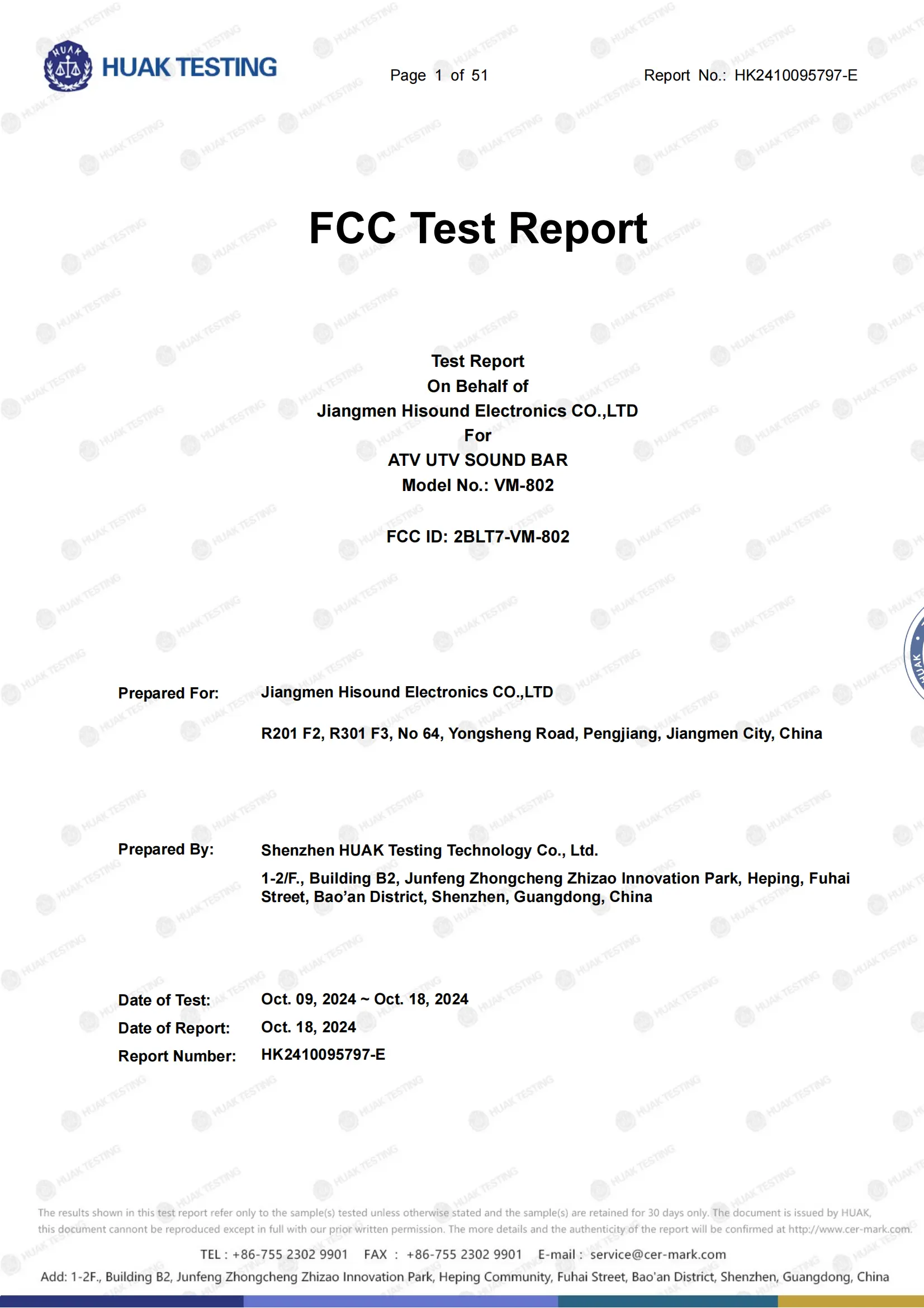
CE, FCC, RoHS, and E-mark certifications for vehicle safety compliance.
Vibration resistance, salt spray resistance, and IPX7/IPX8 waterproofing.
Stable component sourcing, SMT assembly capacity, and reliable export logistics.
Answers to common acoustic and electrical integration questions from engineers, buyers, and custom builders.
Sensitivity indicates how efficiently a speaker converts electrical power into sound pressure levels (SPL). An increase of 3dB in speaker sensitivity achieves the same volume boost as doubling the amplifier power. High-sensitivity speakers maximize volume output while minimizing the draw on the ATV's battery and alternator.
We recommend a minimum rating of IP66 for protection against heavy water spray, though IP67 or IP68 is ideal for components exposed to submersion and mud pressure washing. Proper sealing with custom gaskets, hydrophobic speaker cone materials, and potted electronics protects the internals from corrosion and moisture damage.
Class-D amplifiers use pulse-width modulation (PWM) to operate at around 90% power efficiency, compared to the 50-60% efficiency of Class-A/B designs. By converting more energy directly into sound and generating less waste heat, Class-D setups run cooler and draw significantly less current from the vehicle's electrical system.
Engine vibration and wind noise primarily mask low-end bass and lower-midrange frequencies (100Hz to 600Hz). Boosting vocal and high frequencies (1kHz to 5kHz) while rolling off deep bass sub-harmonics helps keep the audio clear and intelligible without driving the speakers into clipping.
Full-lamination eliminates the air gap between the display panel and the outer touch glass. This reduces internal reflections, improves visibility in direct sunlight, and prevents condensation or dust from gathering under the screen.
A trusted manufacturing partner delivering high-reliability vehicle electronics for international markets since 1979.
Founded in 1979, Hisound has built over 40 years of expertise in technology R&D, brand operations, and global platform distribution. We specialize in vehicle audio engineering, waterproof marine speakers, power-sports soundbars, and smart motorcycle head units. Our manufacturing processes focus on durability, precision testing, and quality certification, ensuring our products perform reliably in demanding environments.
We use high-precision foam adhesive and high-pressure defoaming chambers to seal display modules and cases, preventing moisture entry and ensuring long-term IPX8 water resistance.
Our patented removable main unit designs protect systems from theft, while built-in DVR recording capabilities reduce installation clutter by eliminating the need for separate cameras.
Our displays feature high-nit LED backlights and 2.5D laminated touch panels, maintaining readability in bright, direct sunlight.
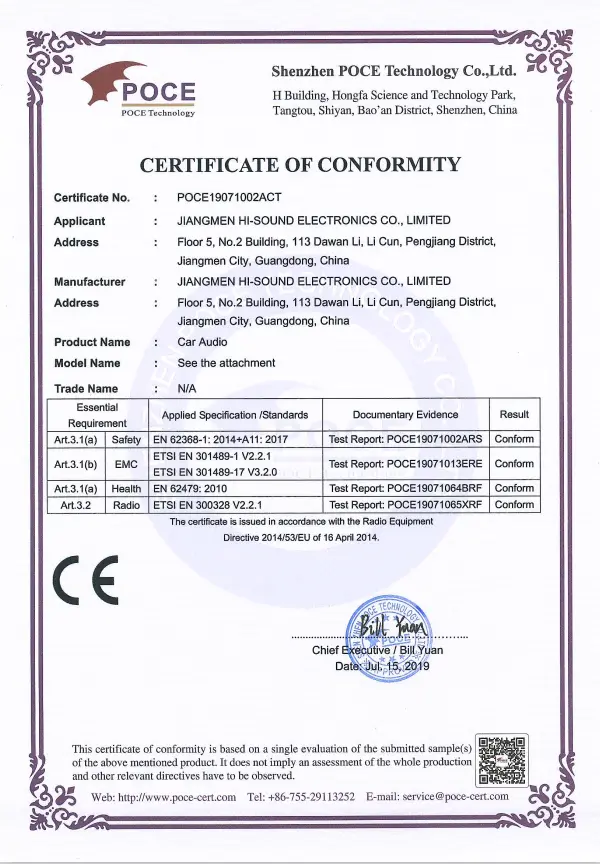
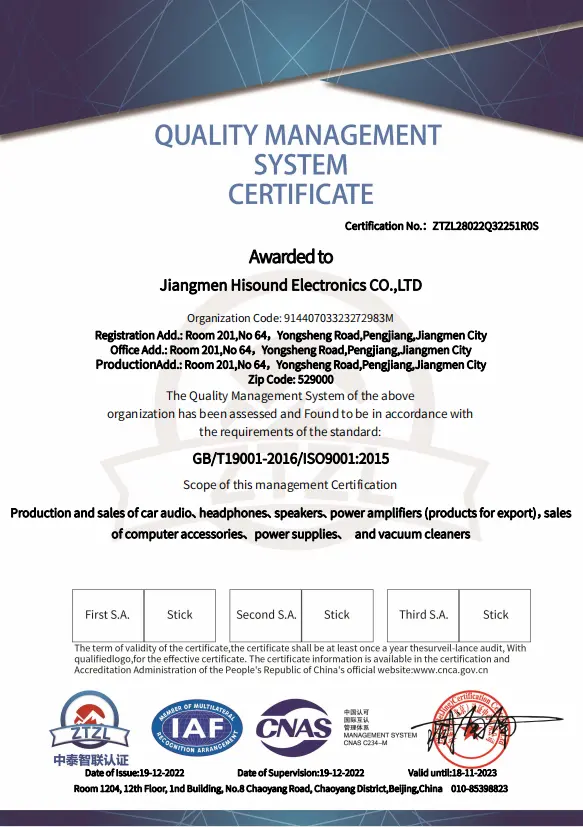
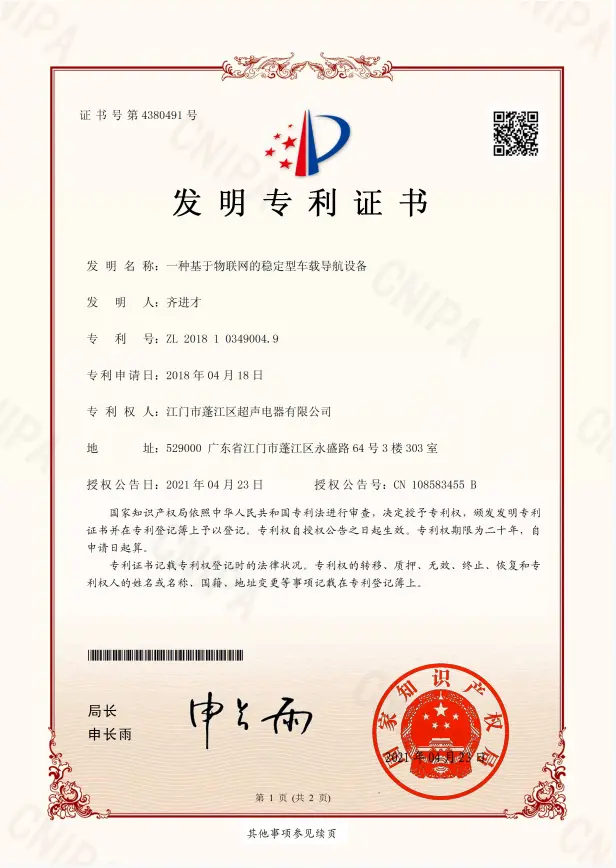
Every product undergoes extensive testing for vibration resistance and extreme thermal performance. Our facilities comply with CE, FCC, RoHS, and ISO manufacturing standards.
Verifying board-level operations and electrical safety before housing assembly.
Assembling display glass, touch digitizers, and internal components.
Running systems continuously at high power to catch early component issues.
Submerging units under simulated high pressure to verify seals.
Customizing private labels and serial numbers for OEM orders.
Our manufacturing and testing processes adhere to international quality standards.




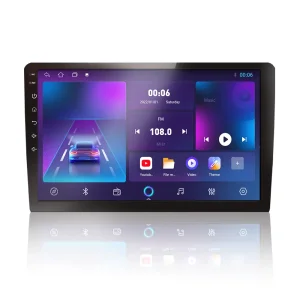
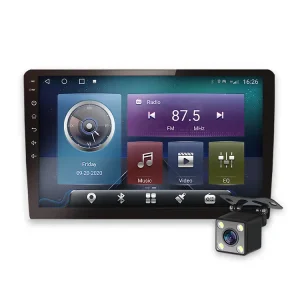
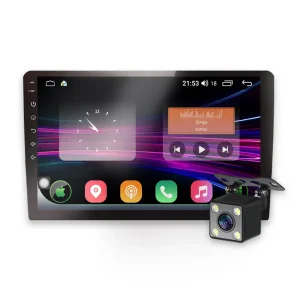
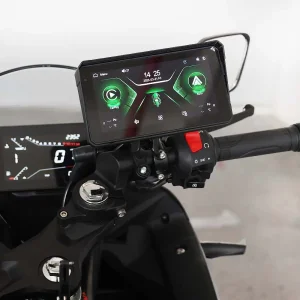
Discover our range of dual-DVR GPS systems, high-performance multimedia displays, and rugged smart screens.


 Hisound carAudio