Explore our core product line of professional display systems, in-vehicle Android players, and high-performance screens customizable for golf carts, utility vehicles, and outdoor equipment.
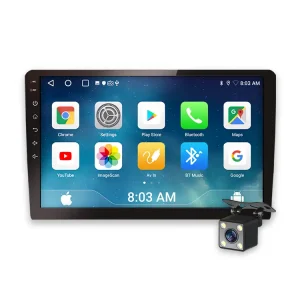
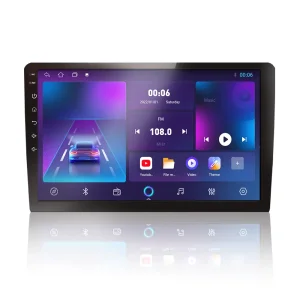
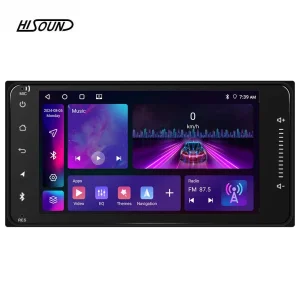
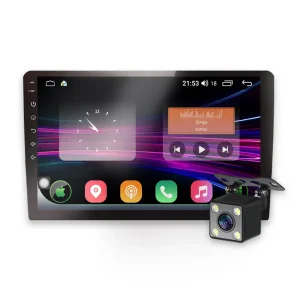
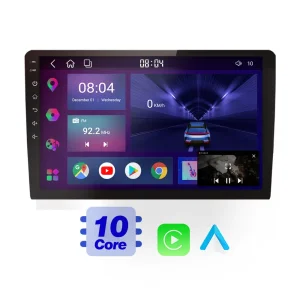
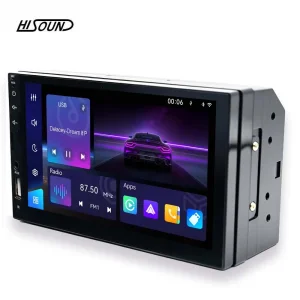
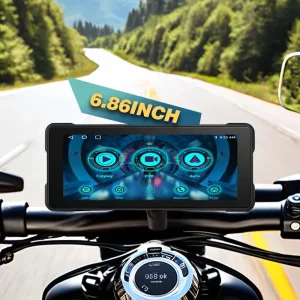
The global golf cart and low-speed vehicle (LSV) industries are undergoing a massive technological shift. Originally engineered for basic round-the-course transport, modern golf carts are expanding into municipal transportation, luxury resort shuttling, multi-hectare industrial complexes, and commercial logistics. This broadening scope has driven the demand for rugged, high-performance display screens that act as centralized vehicle control hubs.
A high-quality golf cart screen must address severe outdoor conditions. Unlike traditional automotive displays, golf cart display screens must withstand high levels of UV exposure, extreme temperature ranges, dust ingress, and direct rainfall, all while remaining readable under direct sunlight. This guide provides an in-depth, professional evaluation of the top suppliers in this sector, outlining the key design criteria required for enterprise-level procurement.
Professional golf cart display manufacturers focus heavily on resolving the major pain points that lead to field failures in commercial applications:
A comparative grid of leading manufacturers offering professional integration, standard modules, and customized B2B solutions.
| Company Name | Primary Screen Sizes | Core Specialization | OS / Connectivity | Target Markets |
|---|---|---|---|---|
| Hi-Sound Display Div. | 7", 9", 10.1", 13" | Waterproof optical bonding, premium Android 15 hubs | Android, Linux, CAN-bus, Wi-Fi | Global OEM/ODM, Resorts, Retrofitters |
| Curtis Instruments | 3.5" to 7" | Electric vehicle instrument clusters, motor integration | Proprietary CAN, J1939 | OEM Golf Cart Manufacturers |
| Winstar Display | 5" to 10.2" | Industrial TFT LCD panels and monochrome modules | SPI, MCU, RGB, HDMI | Industrial Equipment & Fleet Systems |
| Litemax Electronics | 8" to 15" | Ultra-high brightness panels (up to 2000 nits) | Linux, Android, Windows | Outdoor Kiosks & Marine/LSV OEM |
| Sevcon (BorgWarner) | 4.3", 7" | Powertrain management integration dashboards | CANopen, Custom firmware | Heavy Industrial & Premium Utility Carts |
| Sunlight Displays Inc. | 7", 10.4" | Reflective & transflective outdoor displays | RGB, LVDS interfaces | High-sunlight regions, golf course operators |
| Orlaco (Hikvision) | 7", 9" | Heavy-duty rugged camera displays, multi-camera DVR | Analog, Digital, Ethernet | Logistics fleets, airport shuttles |
| Topway Technology | 4.3" to 10.4" | Smart TFT LCD modules with integrated control board | RS232, TTL, CAN-bus | Industrial tooling, EV display retrofits |
| Geniatech | 7" to 15.6" | Android-based industrial single board computers & panels | Android 13/15, IoT interfaces | Smart fleet management, digital advertising |
| Microtips Technology | 5.7", 7", 8" | Custom active matrix TFT LCD modules | LVDS, RGB interfaces | Medical, military, and premium LSV cockpits |
The convergence of IoT, electric powertrains, and consumer-grade smart features is reshaping B2B display specifications.
End users increasingly expect their personal smart devices to pair seamlessly with their utility vehicles. Modern displays are incorporating dual Bluetooth chips, 5GHz Wi-Fi, and optimized Android/Linux kernels to support map routing, music streaming, and voice commands natively, mirroring the passenger automotive experience.
Commercial operators utilize integrated screens for precise yard management. Using precise GPS systems and localized cellular connectivity, golf course managers can enforce geofencing to prevent carts from entering restricted areas, remotely monitor battery SOC, and push visual alerts or advertising direct to the cart operator.
Golf carts operate on wide-ranging DC voltages, typically 36V, 48V, or 72V. The latest displays feature integrated wide-input isolated buck converters (handling 9V to 90V DC) to prevent damage from voltage surges during acceleration, and communicate with the motor controller via high-speed CAN networks.
When sourcing display systems at scale, purchasing managers must balance engineering versatility, quality control, and unit costs. China has developed a highly integrated supply chain that offers unique advantages for OEM/ODM screen manufacturing:
The concentration of glass processors, driver IC design firms, backlight assembly lines, and SMT (Surface Mount Technology) board-packing facilities in manufacturing hubs like Shenzhen, Dongguan, and Suzhou enables rapid prototyping and short lead times. Design iterations that might take months elsewhere can be finalized in weeks.
Chinese factories are highly adapted to low-to-medium volume high-mix production. Custom housing molds, screen UI customization, logo screen printing, custom cable harnesses, and tailored software configurations are offered with relatively low Minimum Order Quantities (MOQs), allowing smaller golf cart brands to achieve a customized look.
High-tier factories leverage automated testing arrays including environmental chambers (for high/low temperature cycles, humidity testing), vibration test tables, and specialized salt-spray chambers to simulate coastal golf course conditions. This ensures that the displays achieve certifications like CE, FCC, RoHS, and water-resistance up to IPX8 prior to dispatch.
A structured step-by-step workflow designed to take your design concept from raw engineering requirements to global distribution.
Define application context, screen dimensions, optical requirements, waterproofing, CAN protocols, mounting constraints, and custom branding needs.
Our experienced engineering team develops the electrical schematic, structural enclosure files, PCB layouts, UI mockups, and thermal management models.
Construct functional prototypes, complete optical performance checks, verify IP67/IPX8 water resistance, and run compatibility testing on physical carts.
Initiate mass production with robust ISO 9001 quality controls, functional burn-in testing, protective packaging, and continuous after-sales technical support.
A golf cart display is more than just an instrument panel; it is a critical component of the vehicle's environment. Different locations demand customized software interfaces and specialized hardware profiles:
In resort settings, the display system functions as an information concierge. Integrating GPS networks with localized maps allows the screen to show paths, check guest outtimes, and let users order room service or request support directly from the screen interface. Wireless CarPlay and Android Auto integrations keep passengers connected throughout their stay.
Large manufacturing plants, airports, and military bases use rugged utility vehicles for logistics. In these high-intensity environments, the screen displays telemetry data, battery diagnostics, safety reminders, and load parameters. Multi-camera integration (with DVR recording capabilities) helps operators maneuver in tight spaces, reducing accidents and protecting valuable facility assets.
For golf course operators, the screen is the primary interface for course control. Operators can display real-time hole distances, map graphics, and digital scorecards. Real-time geofencing automatically deters drivers from sensitive turf areas, protecting the course design and reducing maintenance overheads.
Key technical criteria for procurement departments and sourcing managers when auditing overseas display screen factories.
Verify that components use automotive-grade chipsets (like Rockchip or NXP platforms) capable of stable operation across wide temperature ranges (-30°C to +80°C). Optical bonding should use high-quality Optically Clear Adhesive (OCA) or liquid optical resin (OCR) to prevent delamination under constant UV exposure.
Request verified test reports for CE, FCC, RoHS, and IP rating validation from internationally accredited third-party laboratories (such as SGS or TÜV). Ask for details on the factory's standard production line QA routines, including aging test durations (minimum 24-48 hours) and functional checks.
Ensure the operating system (Android or Linux) supports secure, partitioned memory allocations to isolate crucial CAN-bus vehicle operations from consumer application environments. Confirm that the supplier can provide Over-The-Air (OTA) firmware update channels to address field software maintenance without requiring screen removal.
Answers to common B2B technical questions regarding golf cart screens, ruggedized tablets, and custom integration projects.
For reliable legibility in high ambient light and direct sunlight, a screen brightness of at least 800 to 1000 nits (cd/m²) is highly recommended. Standard consumer displays (typically 250-400 nits) will suffer from screen washout and become difficult to read.
Optical bonding fills the air gap between the outer cover glass and the LCD panel using a specialized adhesive (such as OCA or OCR). This process eliminates the possibility of moisture condensation or dust buildup inside the screen, reduces light reflections by up to 90%, and significantly enhances resistance to impact and vibration.
Standard electronics operate on low voltage (typically 5V or 12V DC). To safely run on a golf cart's main traction pack (36V, 48V, or 72V), you must use either a display with a wide-input voltage regulator (e.g., 9V-90V DC input) or an external step-down DC-to-DC converter to deliver stable power and prevent electrical damage.
Most modern electric powertrains communicate diagnostic data using CAN-bus protocols (such as J1939 or CANopen). A compatible display interface reads battery state of charge (SOC), motor temperature, speed, error codes, and current draw from the controller and displays it on the user interface in real time.
For custom designs involving new housing molds, custom PCBs, or tailored interfaces, tooling and initial samples typically require 6 to 8 weeks. Once the prototype is verified and signed off, mass production lead times generally range between 4 to 6 weeks, depending on materials availability and order volume.
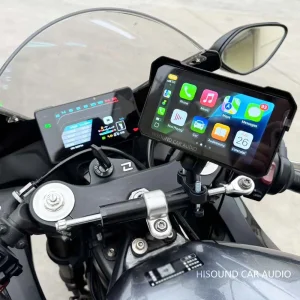
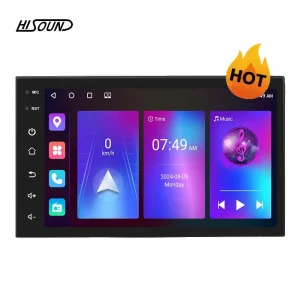
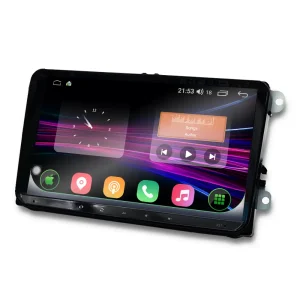
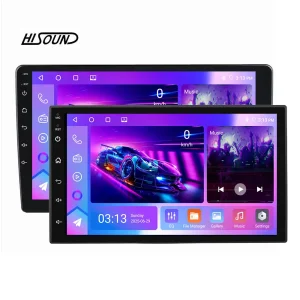
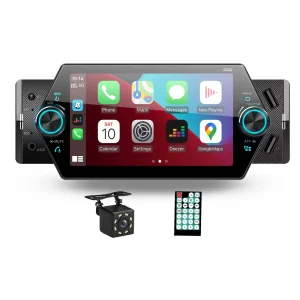
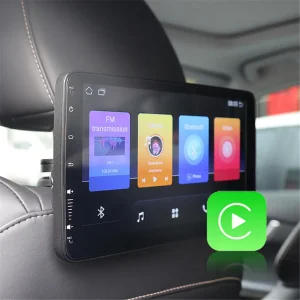
Discover more specialized in-vehicle screens, motorcycle-grade waterproof displays, custom soundbars, and high-performance head units ready for bulk customization.
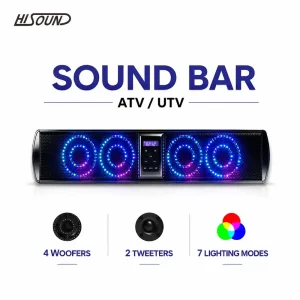
 Hisound carAudio