Select industrial-grade and automotive-certified displays engineered for smart mobility, custom off-road recreation, and fleet integration.
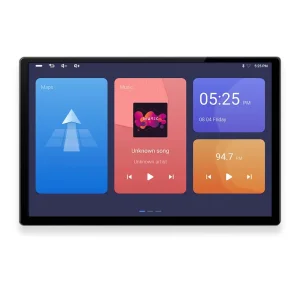
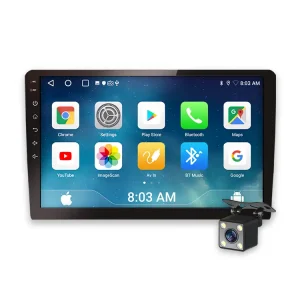
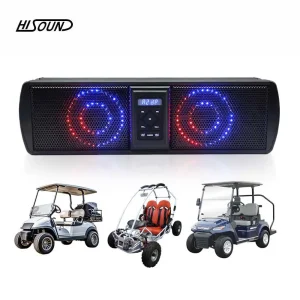
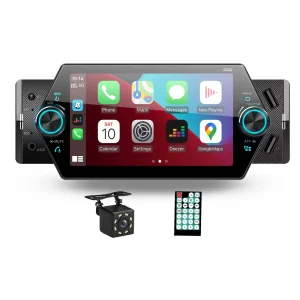
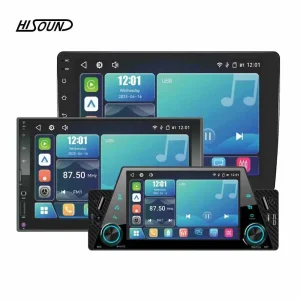
An authoritative analysis of connected mobility interfaces, network architectures, and hardware ruggedization for global supply chain leaders.
The modern automotive and industrial transport sectors are undergoing a structural transition. The standard in-vehicle infotainment (IVI) and standalone navigation systems of yesterday are giving way to cloud-native, continuous-communication telematics nodes. At the core of this evolution sits the 4G Vehicle Navigation Monitor. It is no longer just a passive display layer; it functions as a critical processing gateway, aggregating CAN-bus telemetry, cellular IoT inputs, real-time GNSS positioning, and local sensor data to stream insights to enterprise cloud systems.
From fleet logistics and shared mobility fleets to rugged off-road utility vehicles (UTVs/ATVs) and low-speed commercial vehicles (golf carts, sightseeing shuttles), modern operations depend heavily on persistent connectivity. Traditional systems relying purely on local Bluetooth or smart-device tethering fail to meet the standards required for enterprise fleet dispatch, real-time safety tracking, and automated geofencing. Implementing a dedicated 4G LTE navigation unit ensures that the vehicle remains online independently of the operator's personal devices, maintaining secure end-to-end data pipelines for operators, logistics companies, and corporate managers alike.
Decoupling software applications from legacy hardware to build next-generation smart cockpits and autonomous systems.
The industry is transitioning from simple RTOS setups to Android Automotive OS (AAOS) and Linux-based platforms. These operating systems support virtualization through hypervisors, enabling navigation, safety systems, and fleet applications to run on a single chip without interference.
Our 4G LTE platforms are engineered with upgrading paths toward sub-6GHz 5G modules. This design choice guarantees compatibility with cellular V2X infrastructures, allowing vehicles to receive real-time signals from smart city grids and highway networks.
By pairing 4G LTE modems with dual-frequency GNSS modules supporting RTK (Real-Time Kinematic) technology, our monitors achieve positioning accuracy down to the centimeter. This precision is ideal for automated port logistics, agricultural work, and mining operations.
From client specifications through hardware/software co-design to global certification and scalable manufacturing.
Customize screen size, resolution, brightness, touch panel, waterproof structure, and mounting design to match your specific vehicle application requirements.
Customize maps, navigation UI, voice guidance, route planning, and vehicle management features tailored for distinct industrial operations.
We build customized mounting brackets, wiring harnesses, and digital interfaces for golf carts, shuttle vehicles, resort fleets, and specialized vehicles.
Get private-label housings, tailored brand packaging, custom splash screens, and localized UI design backed by our engineering team from initial mockup to high-volume manufacturing.
Define your vehicle application, display dimensions, navigation software requirements, waterproofing levels, installation methods, and brand aesthetics.
Our experienced R&D engineering team designs the hardware, custom software kernels, mounting architecture, and custom UI optimized for your project.
We assemble prototype units to run extensive stress tests: waterproof ratings, thermal limits, display reliability under sunlight, firmware stability, and test vehicle installation.
We shift the verified design to our mass production lines under rigorous quality control protocols, backed by continuous engineering support throughout the product lifecycle.
How specialized businesses deploy 4G-enabled navigation monitors to drive efficiency, enhance safety, and protect their assets.
Enterprise logistics fleets require constant cellular communication to feed location updates, driver behavior data, and cargo monitoring details to centralized dispatch dashboards. Integrating our 4G monitors directly with the truck's J1939 CAN-bus lets operators track engine health, schedule preventive maintenance, and dynamically reroute vehicles to minimize idle time.
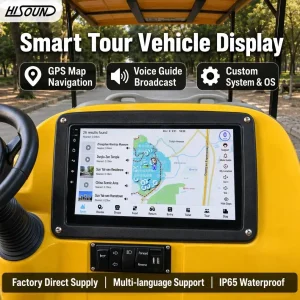
For modern resorts, planned communities, and golf courses, 4G navigation displays offer distinct operations benefits. Operators can use geofencing to prevent vehicles from wandering off designated paths, display targeted advertising, and enable contactless billing systems. High-brightness displays are critical here to keep maps legible even under direct sunlight.
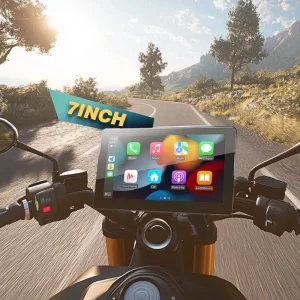
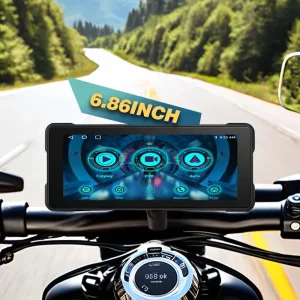
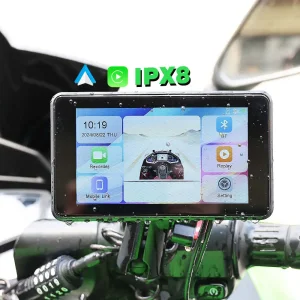
Off-road recreational vehicles face demanding operating conditions: heavy vibrations, dust, mud, and water immersion. With IPX8 waterproofing, robust vibration dampening, dual Bluetooth connectivity for helmet intercom systems, and built-in DVR recording, our motorcycle and UTV displays deliver stable navigation and reliable recording performance in rugged environments.
Discover how our advanced manufacturing facility combines automation with rigorous quality assurance to deliver robust product reliability.
Operating a high-tech electronics facility in China means constantly upgrading manufacturing capabilities. Our production floor features high-speed SMT placement machines, automated optical inspection (AOI), and multi-stage testing setups. These tools minimize manual errors and ensure that every PCB assembly meets strict automotive standards before moving to final integration.
Because these displays are deployed worldwide in unpredictable environments, we put prototype and batch samples through intense environmental testing. Our facility operates dedicated testing chambers to confirm long-term durability across different stress points:
We use automated packaging lines to seal finished goods securely, protecting components from humidity and contamination during global transit.
Our environmental chambers stress-test displays from -30°C to +85°C to ensure stable cold starts and prevent thermal shutdown in high-heat environments.
We use high-pressure water spray booths and custom mechanical testers to verify enclosure integrity, ensuring our screens earn their IPX8 ratings.
We simulate off-road conditions and extended highway travel using multi-axis vibration tables to isolate and fix potential connection points of failure.
How we help buyers navigate cellular carrier certifications and local safety regulations.
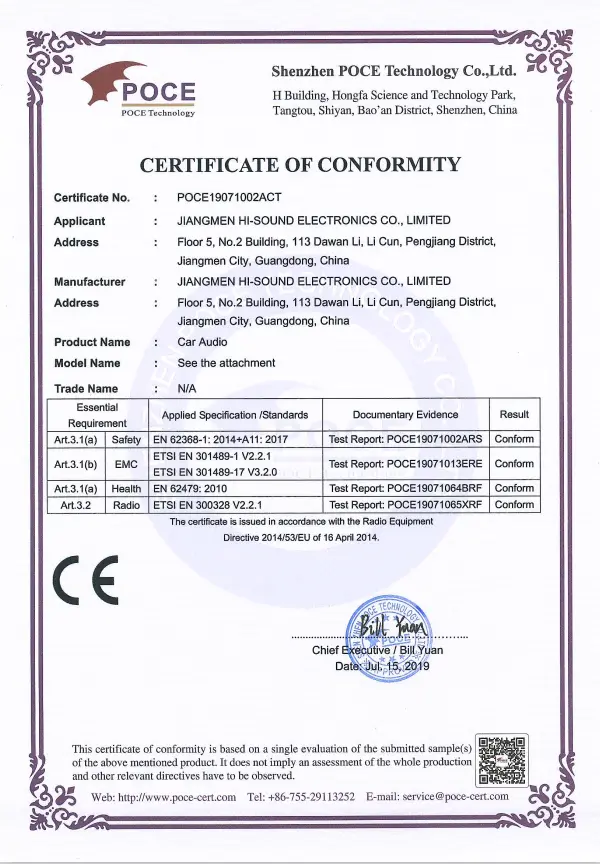
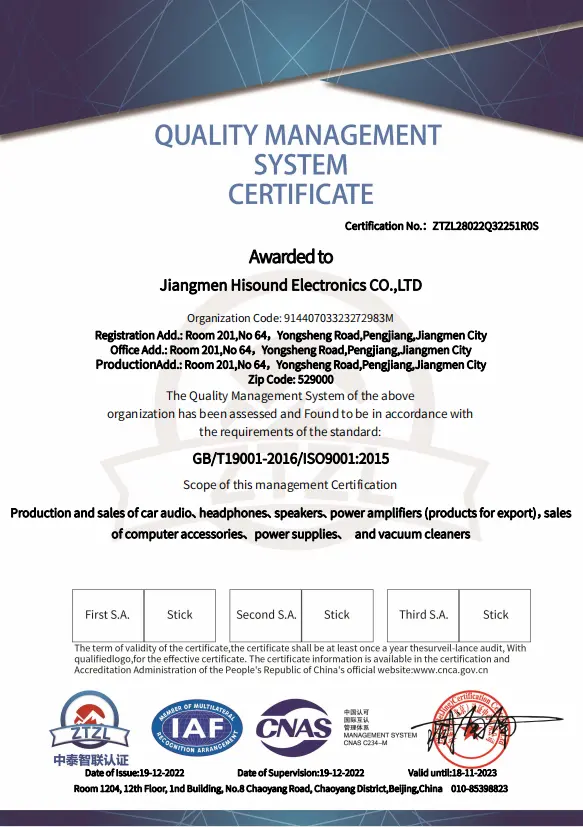
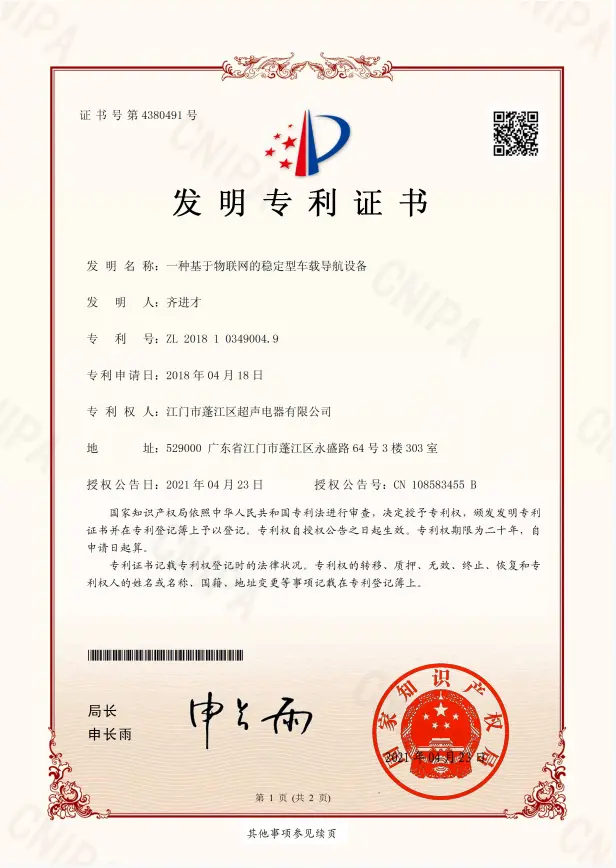
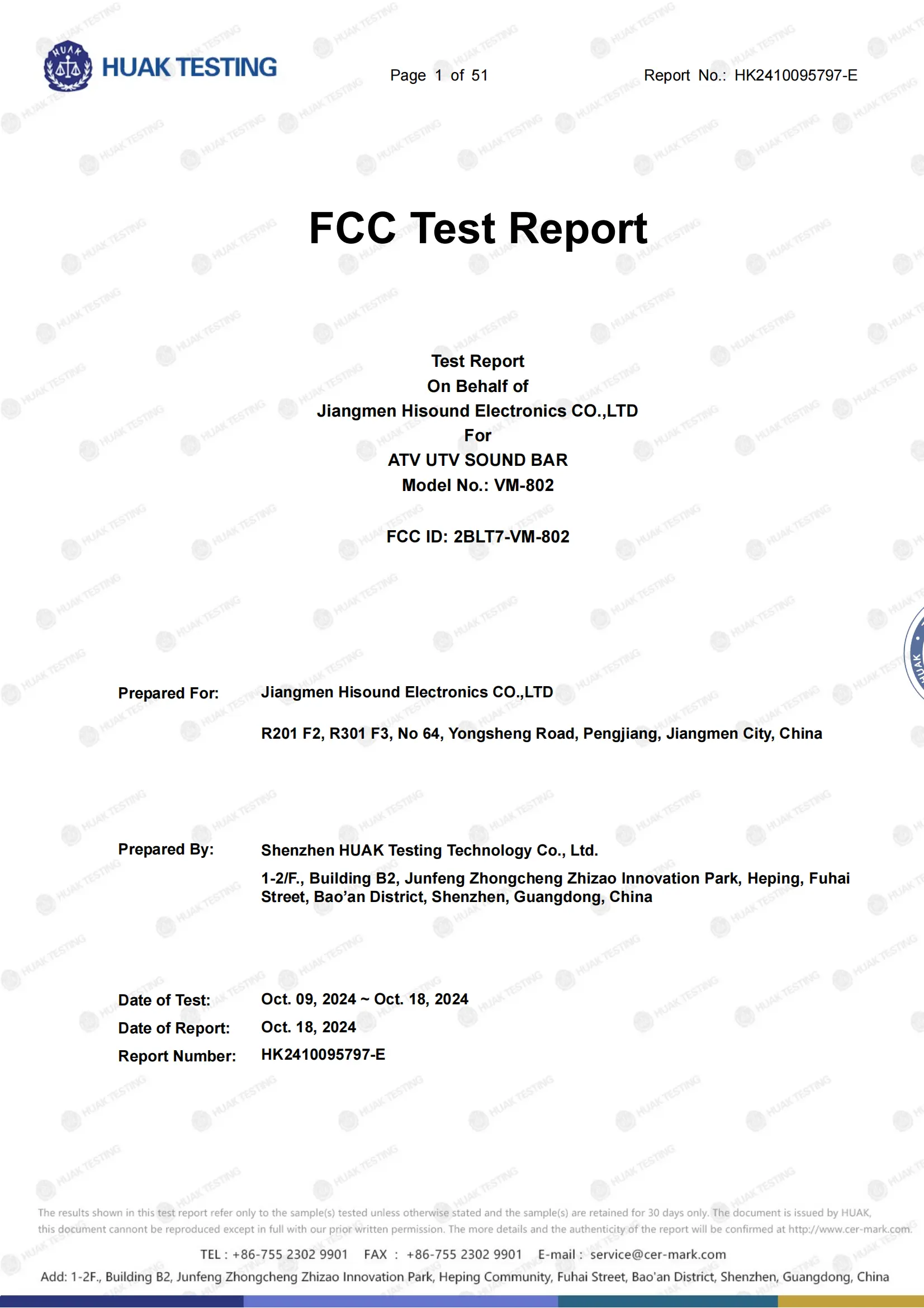
Importing connected telematics hardware requires navigating complex regulatory standards. A 4G monitor contains high-frequency cellular RF components, necessitating proper regional certification to prevent custom delays and product recalls. Our engineering division works closely with third-party testing houses to secure crucial compliance documentation for international markets:
Our compliance achievements reflect our commitment to engineering quality, safety, and manufacturing consistency.

Key technical considerations for automotive importers and fleet managers selecting a manufacturing partner.
Purchasing vehicle monitors at scale involves balancing unit costs, manufacturing lead times, and hardware longevity. Because automotive platforms typically stay in service for 5 to 10 years, choosing a manufacturer that supports long-term product lifecycles is essential. Procurement managers should evaluate three main areas:
1. Thermal Management: Enclosed cabins and exposed dashboards generate significant heat. Look for displays built with structural aluminum heat sinks and automotive-grade chips rather than consumer-grade components that throttle under heat.
2. Optical Bonding & Anti-Glare Glass: Displays used outdoors or in bright cabins need more than just high backlight power. Optical bonding (using resin to glue the touch panel to the LCD) eliminates internal reflection, improving contrast and legibility in sunlight while making the glass assembly more impact-resistant.
3. Customization of Firmware & UI: B2B deployments often require customized Android builds. We provide buyers with customized boot animations, default-installed navigation apps, API endpoints to access vehicle telemetry, and locked settings screens to prevent unauthorized configuration changes by drivers.
Answers to common hardware, installation, and software customization questions from our engineering support team.
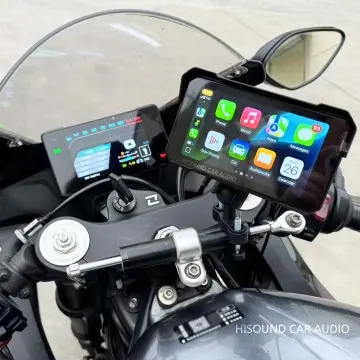
Rugged IPX8 displays engineered specifically for motorcycle handlebars, offering dual Bluetooth connections and high brightness.
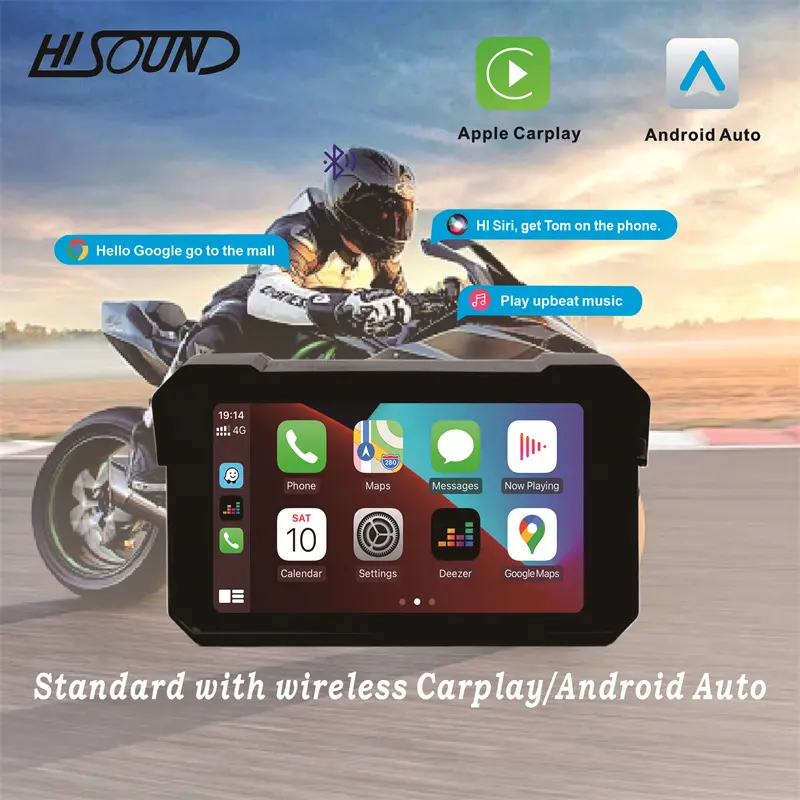
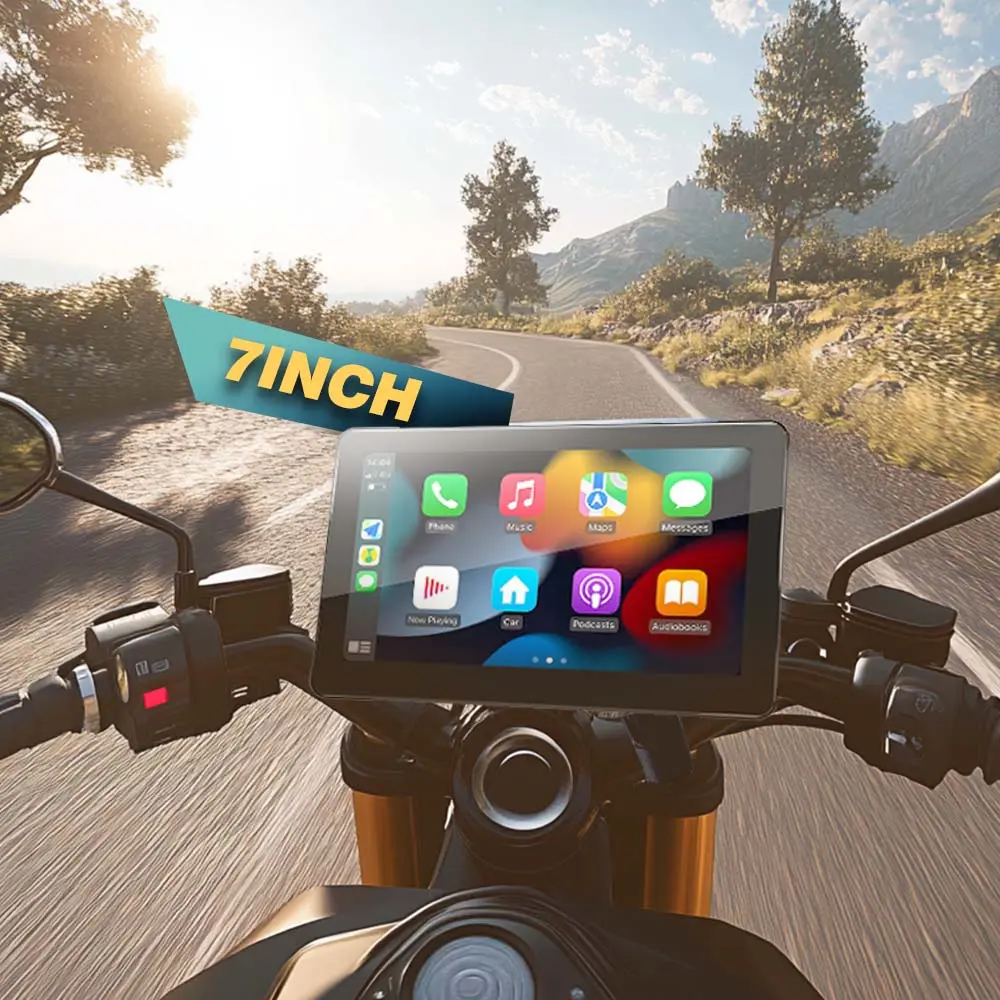
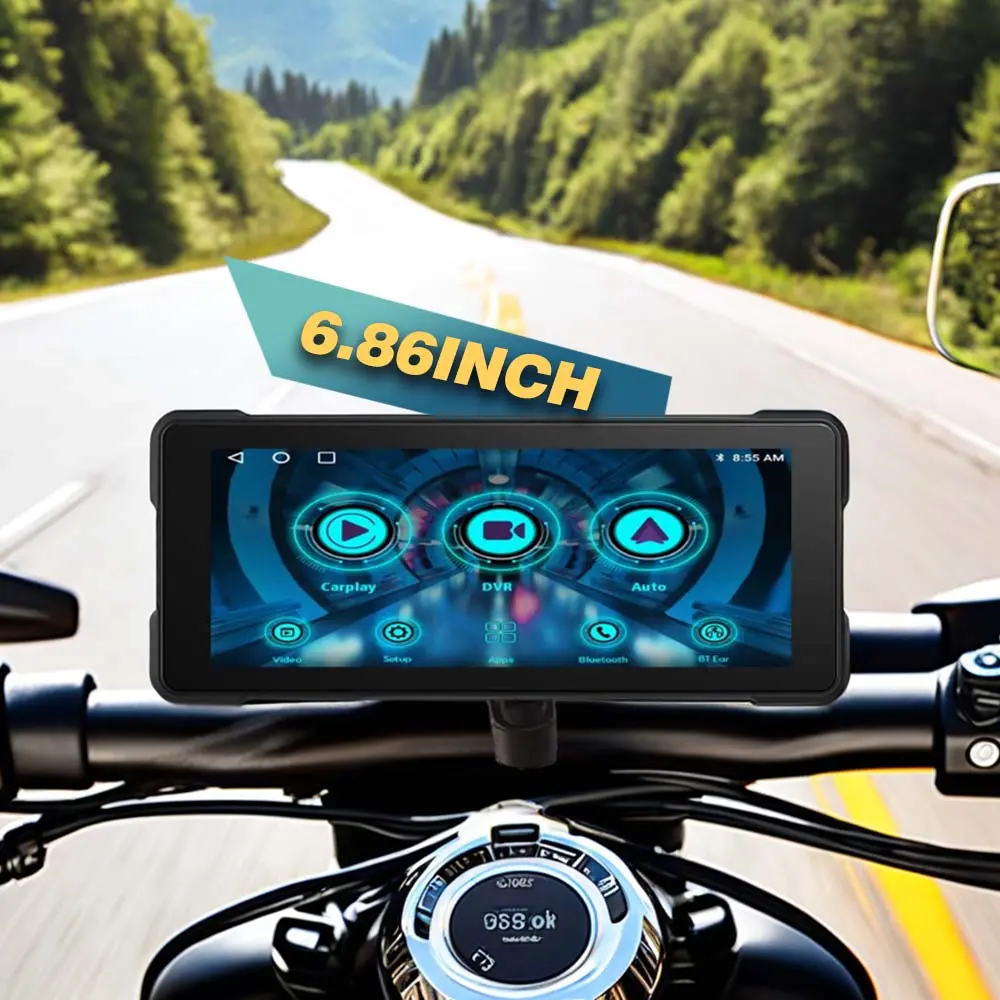
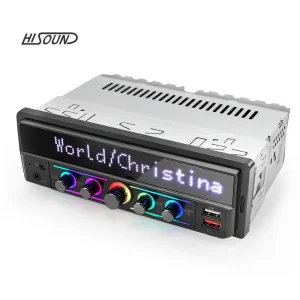
Automotive-grade rear entertainment systems and dashboard-integrated Android media centers.
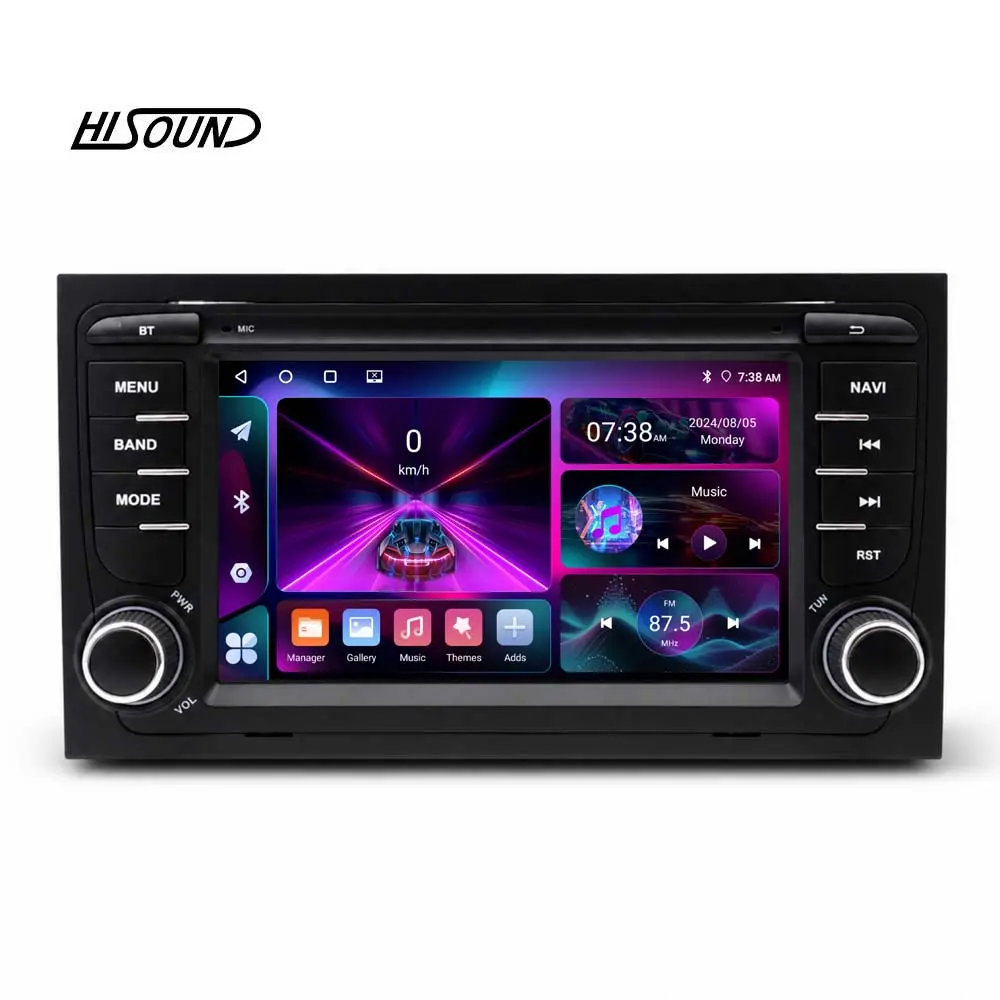
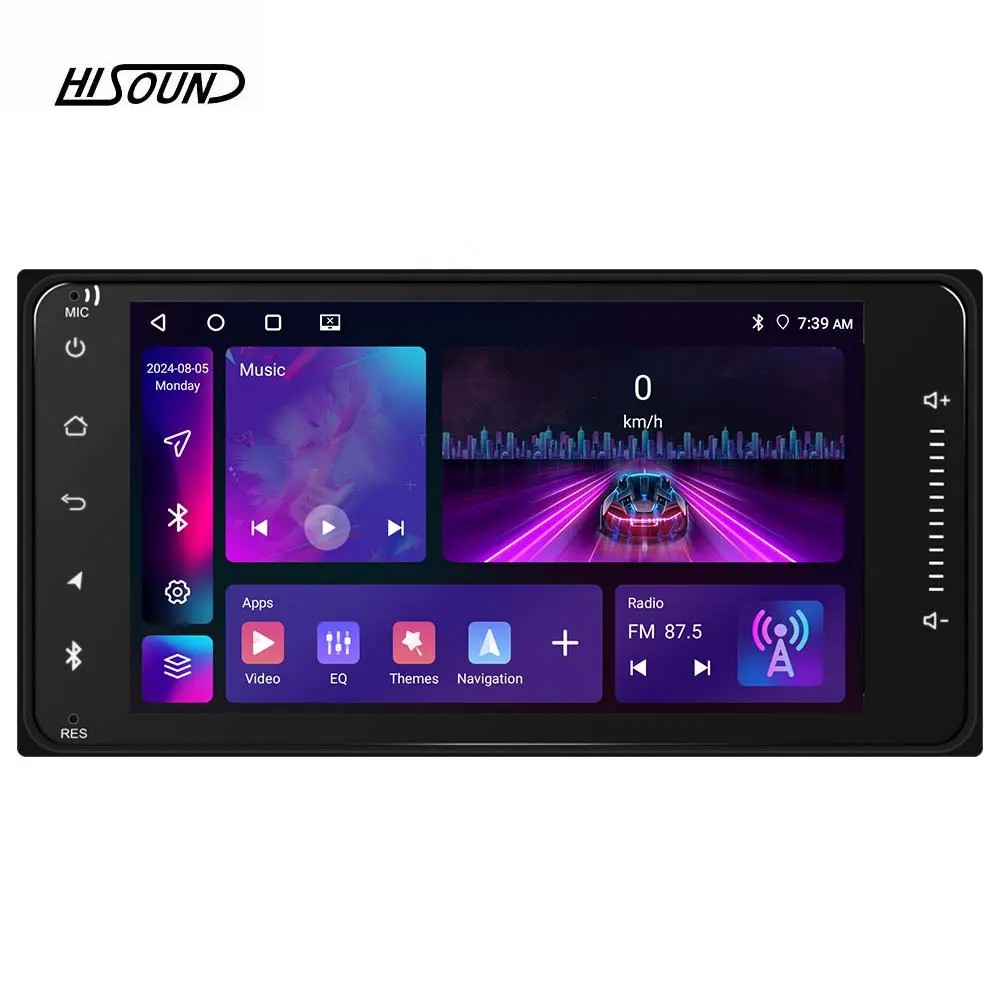
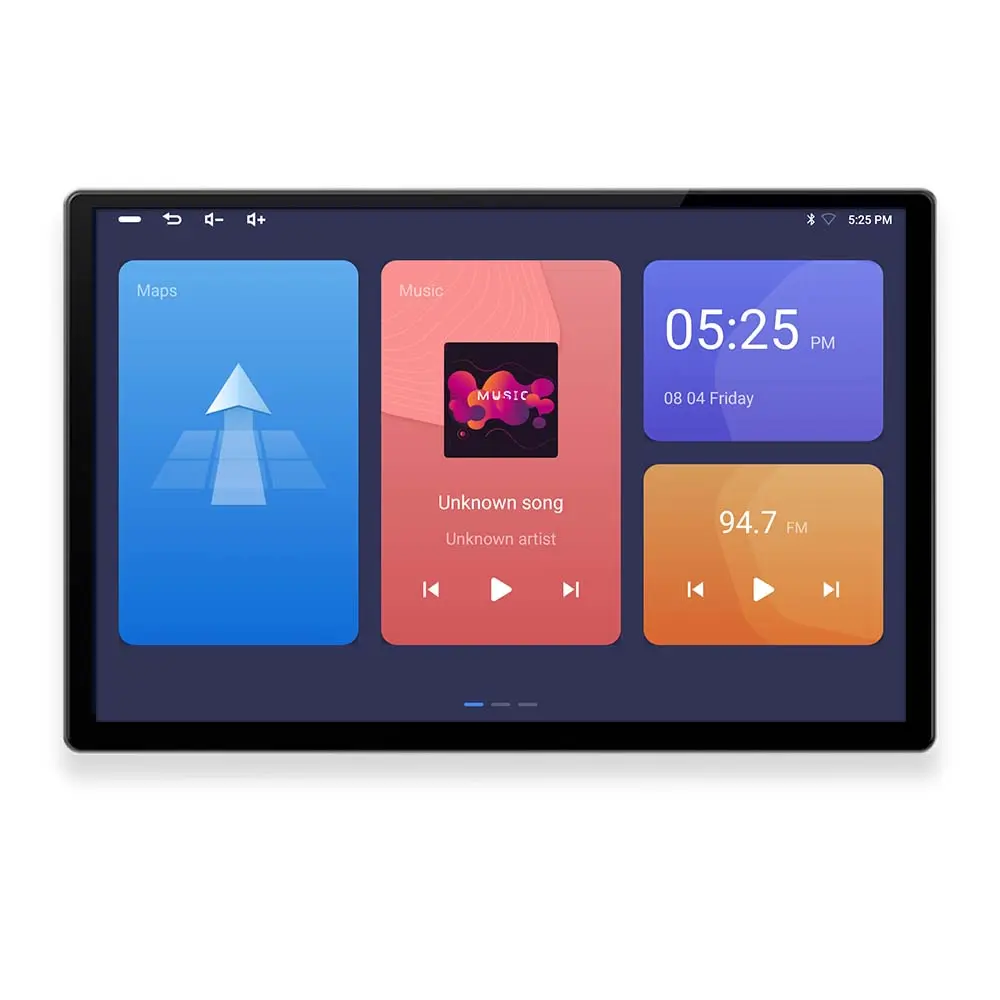
Many customers often ask: "Why choose us for your motorcycle navigation and rear-seat entertainment needs?" It's an important question. For businesses large and small, what matters most is consistency, engineering innovation, and reliable partnership. Founded in 1979, our company has grown over 44 years into a competitive manufacturer with core strengths in tech R&D, brand operations, and global logistics support. In 2004, the REFINE Rui Feng brand was officially established to carry forward this standard of quality.
At Hi-Sound, we focus on growing with our partners by building long-term, reliable relationships based on open communication and shared success. Whether you are a small distributor or a large fleet system integrator, we support your business with competitive pricing, prompt manufacturing turnarounds, and a committed quality assurance process.
We seal display components using imported foam adhesives and high-pressure defoaming chambers, delivering a durable seal between the screen glass and outer chassis for reliable outdoor use.
Our patented removable main unit designs protect displays from theft while including integrated DVR functions, eliminating extra cabling to simplify installation.
We use 2.5D optical full lamination to ensure display readability in high ambient light, ensuring clear navigation readouts even under direct summer sun.
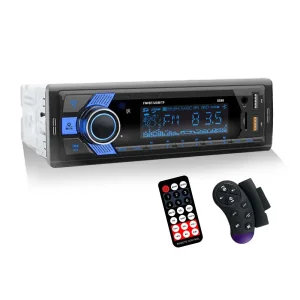
Explore our extended range of motorcycle GPS displays, single-DIN audio players, and smart vehicle monitors.

 Hisound carAudio