Browse our baseline product inventory designed for diverse automotive, marine, and specialized off-road vehicle integrations.
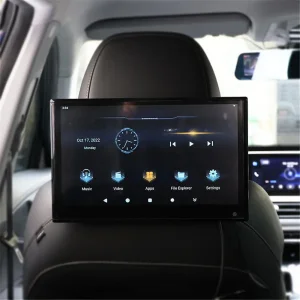
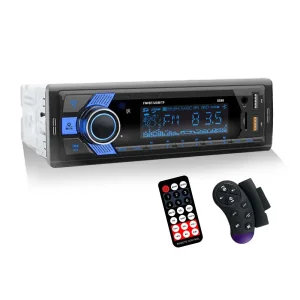
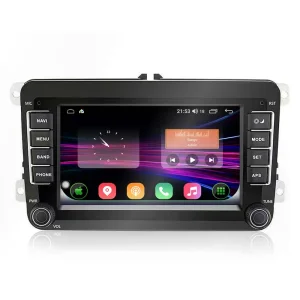
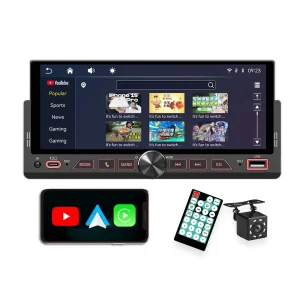
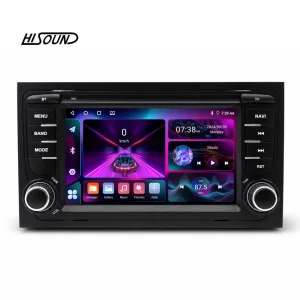
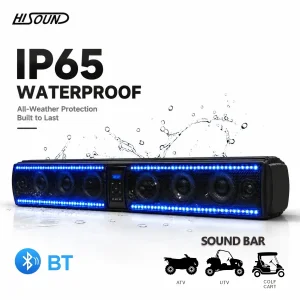
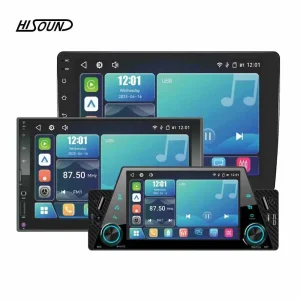
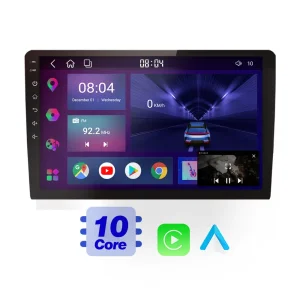
Moving beyond basic green mapping towards cloud-connected fleet optimization and real-time operations.
Modern golf cart GPS units rely on multi-constellation GNSS engines (GPS, GLONASS, Galileo, BeiDou) paired with Real-Time Kinematic (RTK) corrections to deliver sub-meter accuracy. This precision prevents vehicle drift errors, ensuring strict enforcement of geofences around greens, bunkers, and sensitive environmental zones.
Through integrated LTE-M, NB-IoT, or robust Wi-Fi mesh systems, fleet managers monitor cart status, battery diagnostics, and real-time pace-of-play statistics. Two-way communication allows dispatchers to send custom text alerts, hazard warnings, or food and beverage ordering menus directly to screen displays.
Advanced telemetry units interface directly with the cart’s speed controller via CAN-bus protocols. If a vehicle crosses a defined geofence boundary, the GPS system issues audio warnings and signals the controller to safely bring the cart to a crawl, protecting both golfers and turf conditions.
Understanding the strict physical requirements for outdoor electrical equipment subject to extreme weather and vibration.
Customize display panels to your application requirements. Our configurations feature high-brightness IPS LCD displays (up to 1,200 nits) to maintain legibility in direct sunlight. Choose from multiple screen sizes, scratch-resistant tempered glass cover plates, capacitive multi-touch panels, and custom rugged enclosures built for outdoor vehicle use.
Our production methods feature an advanced waterproofing process utilizing imported foam adhesives and specialized high-pressure defoaming chambers. This method ensures a durable, moisture-resistant seal between the screen glass and the outer casing, providing IPX8 waterproof reliability under rain, humidity, washdowns, and dew conditions.
Golf carts navigate rough, uneven terrains. Our internal PCB design incorporates reinforced mounting standoffs, potted electronics, and lock-tight wiring connectors. Every product line undergoing ODM development is validated on vibration table testing rigs to ensure solder joint and component integrity over long lifecycles.
Integrating professional telemetry software pipelines with robust user interfaces to enhance the guest experience.
Tailor your system with custom mapping software, voice guidance, real-time weather alerts, and 3D terrain flyovers. We develop custom map layers, route planners, and speed restrictions, enabling operators to control pace of play and manage traffic distribution across their properties.
Our engineering services supply custom mounting brackets, wiring looms, and power converters supporting wide DC input ranges (typically 12V to 72V) to integrate with gas-powered, lead-acid, or lithium-ion golf cart configurations, municipal utility vehicles, and transport shuttles.
We provide full white-label customization. From screen-printed logos on outer housings and tailored UI splash screens to customized firmware builds and packaging solutions, our engineering team manages the design cycle from functional prototypes to full production runs.
Year Founded
Years of Engineering
Certified Ingress Protection
End-of-Line Quality Inspected
How our engineering and manufacturing teams validate products from design phase to delivery.
Every motherboard undergoes electrical testing, GPS signal sensitivity checks, and touchscreen calibration routines.
Units undergo high and low-temperature stress tests (-30°C to +80°C) to simulate extreme winter and summer operations.
Sealed display assemblies are tested in high-pressure water spray booths and submersion chambers to confirm IPX8 compliance.
All finished electronics run continuously on aging racks for 48 hours to weed out early components failure risks.
Addressing international B2B buyer needs across North American, European, and Asia-Pacific markets.
Our telematics modules are certified to comply with international regulations, holding CE, FCC, RoHS, and PTCRB certifications. This guarantees interference-free operations and compliance with local cellular frequency allocations (LTE-M, NB-IoT, and 4G LTE bands).
Our software supports multiple languages, localized distance measurements (yards, meters, miles), and custom regional map systems (such as OpenStreetMap, Google Maps API, or custom vector cartography formats), ensuring ease of deployment globally.
Our designs include patented removable main unit mounts to protect screens against theft and vandalism, alongside integrated dual DVR recorder features that capture operational footage to protect properties against liability claims.
Deploying ruggedized navigation systems across varied commercial and municipal environments.
Enhance hospitality services with electronic scorecards, food ordering interfaces, and pro-shop messaging capabilities. High-accuracy geofencing restricts vehicles from entering protected course areas, preserving turf quality.
Provide low-speed electric vehicles (LSVs) with Turn-by-Turn GPS navigation, speed zone warnings, emergency call features, and integration with local community messaging services.
Track baggage shuttles, utility transport carts, and industrial maintenance vehicles across large facilities. Monitor battery status, vehicle speeds, and location histories to improve operations.
Anticipating the technological trends shaping smart off-highway vehicle platforms.
Developing deeper integrations with CAN-bus battery management systems (BMS) to show cell temperatures, state of charge, and cell health warnings, helping fleet managers schedule maintenance.
Integrating radar and camera feeds into display modules, adding forward collision alerts, lane warnings, and blind-spot detection to low-speed vehicles operating near pedestrian traffic.
Implementing Vehicle-to-Everything (V2X) communications, allowing golf carts to receive speed limit signals from local signs and alert drivers to nearby vehicles.
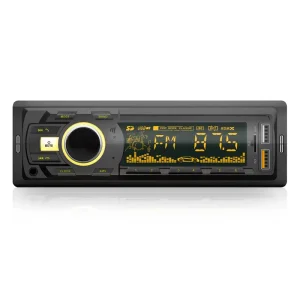
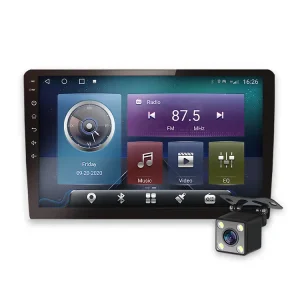
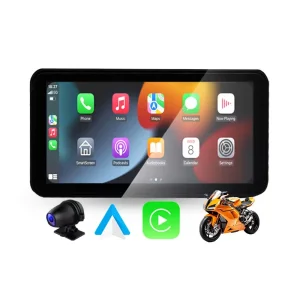
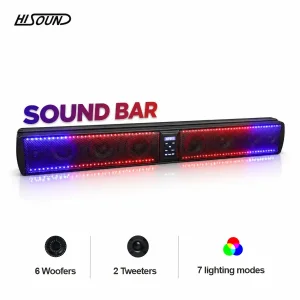
Further hardware options for specialized B2B projects, fleet applications, and custom retrofitting programs.
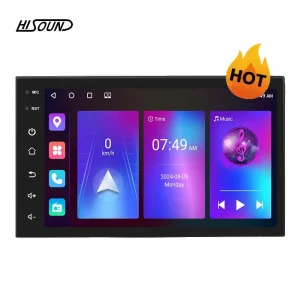
Answers to technical, operational, and commercial questions from wholesale buyers and system integrators.
Our standard MOQ for custom ODM projects, involving enclosure design, custom wiring harnesses, or proprietary firmware loads, begins at 500 units. For off-the-shelf catalog models with simple brand logo printing, we offer lower MOQs beginning at 100 units.
We use high-brightness IPS liquid crystal panels that produce up to 1,200 nits. Combined with 2.5D optical bonding (full lamination technology), we eliminate air gaps between the LCD and cover glass. This reduces reflections and glare while preventing dust and moisture condensation.
We apply imported polyurethane foam adhesives through robotic liquid dispensing systems. Once the screen and housing are joined, they are cured in high-pressure defoaming chambers. This produces an air-tight seal that is verified in IPX8 immersion tanks to ensure resistance against high-pressure washdowns and storms.
Yes. Our Android and Linux-based platforms support API integrations. They connect to club management software via Wi-Fi or LTE networks, syncing real-time player pacing, tee times, digital scorecards, and restaurant order details.
The display module monitors GPS coordinates against saved geofences. If a boundary is crossed, the unit sends speed restriction signals via CAN-bus or analog telemetry controls to the vehicle’s motor speed controller, reducing cart speed safely without cutting power abruptly.
Yes. We integrate multi-band IoT modems supporting global bands (LTE-M, NB-IoT, Cat-1, Cat-4). Our hardware is certified for main networks in North America, Europe, Australia, and Asia-Pacific. We also support regional SIM card integration.
Our systems contain integrated wide-voltage buck-boost converters supporting input ranges of 9V to 90V DC. This allows direct connection to 12V gas cart batteries as well as 36V, 48V, and 72V electric vehicle battery packs without requiring external power reducers.
Maps can be updated via Over-The-Air (OTA) protocols using our cloud management portal when carts connect to the club’s Wi-Fi network, or via a high-speed local USB interface on each cart.
 Hisound carAudio