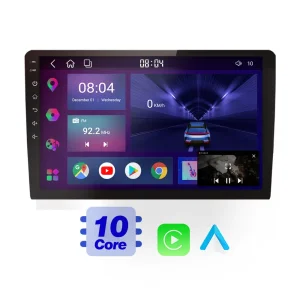
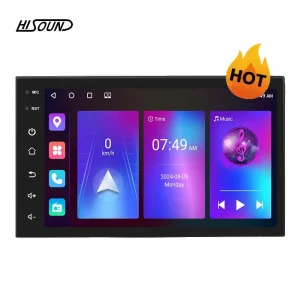
Direct factory prices & integration-ready units optimized for fleets, retail, and local dealerships in Mexico City.
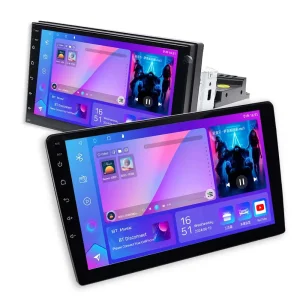
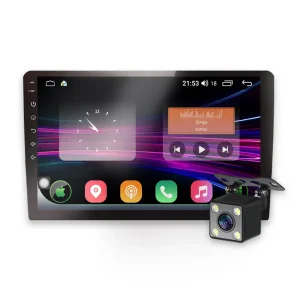
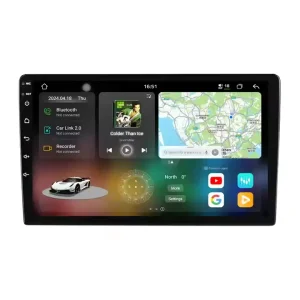
Navigating the transition of in-vehicle technology, infrastructure challenges, and local distribution pipelines.
Mexico City (CDMX) represents one of the largest metropolitan vehicle clusters in the Americas, with over 5.5 million registered passenger vehicles navigating its complex roads. Historically dominated by standard AM/FM analog head units, the local aftermarket is experiencing a massive paradigm shift. High levels of mobile connectivity, coupled with the rapid growth of ride-hailing networks (Didi, Uber, Cabify) and delivery logistics, have made smartphone-integrated vehicle interfaces an operational necessity.
Furthermore, local safety regulations and security protocols are shifting demand toward platforms that support direct digital video recording (DVR) inputs, real-time GPS telemetry, and hands-free voice operations. Wholesale distributors, local dealers, and installation hubs in zones like La Ronda, Nezahualcóyotl, and the broader Estado de México are shifting away from feature-barren stereos toward feature-dense Android 15 systems. Car Android CarPlay technology serves as the hub that bridges the gap between aging vehicle chassis and modern mobile software demands.
Vehicles in CDMX
Smartphone Integration Demand
Tested Thermal Tolerances
NOM Certified Hardware
At a macro-industry level, the automotive electronics supply chain relies heavily on high-speed system-on-chips (SoC) capable of managing concurrent navigation, media decoding, and Bluetooth low-latency profiles. Global Tier-1 infotainment developers are increasingly utilizing Android 15 platforms due to their modular architecture, security policies, and deep API integrations for vehicle telemetry.
For international exporters shipping to Latin America, the focus is on dual-interface stability, high-fidelity digital signal processing (DSP), and compatibility with regional radio tuners. Manufacturers must address the local requirements of the Mexican market, where high altitude (such as Mexico City's 2,240m above sea level) impacts passive thermal dissipation, necessitating optimized heat sinks and higher thermal-grade capacitors on the device motherboard.
Equipped with professional DSP chips featuring 32-band equalizers, time alignment capabilities, and sub-woofer crossover controls to handle ambient metropolitan noise.
All hardware complies with NOM-024-SCFI and NOM-208-SCFI guidelines, ensuring safe electrical integration and secure wireless frequencies.
Offline GPS antennas tuned for Mexico's topography, allowing uninterrupted Waze/Google Maps routing even in deep urban canyons and tunnel networks.
Deploying automotive electronics within Mexico City requires strict alignment with localized consumer expectations and statutory certifications. Our systems offer a complete Spanish localized UI, voice command parameters mapped to Mexican Spanish idioms, and seamless CAN-bus integration configurations to map steering wheel controls for domestic models of Volkswagen, Toyota, General Motors, and Nissan.
From a regulatory standpoint, importing electronic systems requires strict adherence to Mexican customs laws. The devices must support wide operating voltage windows (9V to 16V) to cushion against automotive battery fluctuations typical in fleet environments. High reliability of the wireless modules ensures zero drop-offs when transitioning between 2.4GHz and 5GHz bands during wireless CarPlay handshakes.
Our comprehensive framework covers initial specifications, prototype validation, and industrial production cycles.
Customize screen size, resolution, brightness, touch panel, waterproof structure and mounting design to match your vehicle application.
Customize maps, navigation UI, voice guidance, route planning and vehicle management features for different applications.
Customized mounting brackets, wiring harnesses and interfaces for golf carts, shuttle vehicles, resort vehicles and other applications.
Private-label housing, logo, UI and packaging with engineering support from prototype to mass production.
How we take your localized requirements from draft concepts to reliable mass-production rollouts.
Define vehicle application, display specifications, integration parameters, and local branding assets.
Our engineering team develops the hardware schematics, software ROM, mounting structures, and custom UI skins.
Build physical test samples, run waterproof trials, perform high-low temperature sweeps, and test vehicle integration.
Transition approved golden units to full production, supported by post-delivery engineering and warranty solutions.
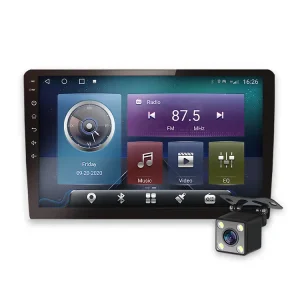
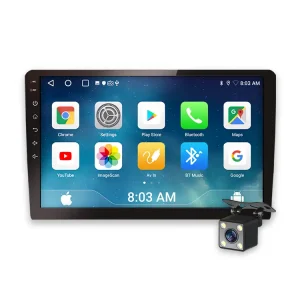
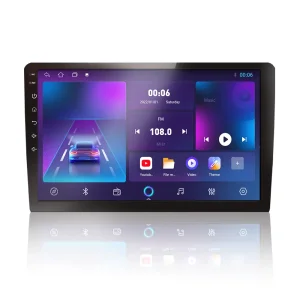
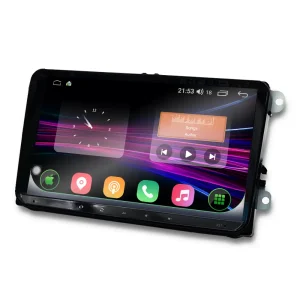
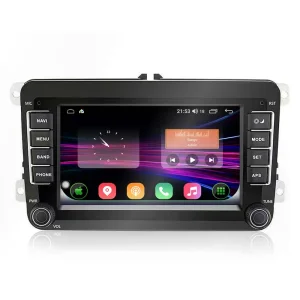
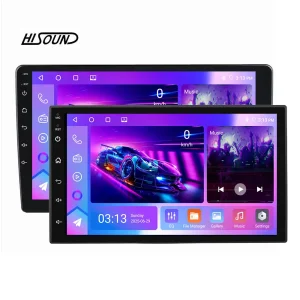
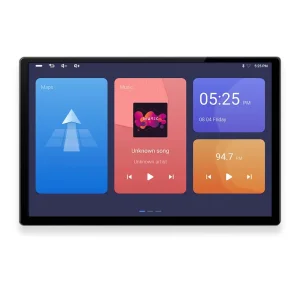
Explore the full selection of double DIN systems, customized vehicle units, and floating screens available for shipment to Mexico City.
Ensuring every system delivers flawless uptime under demanding driving conditions.
Comprehensive checks evaluating processing speeds, memory limits, and software response profiles.
Utilizing high-pressure diagnostic equipment to test seal degradation and humidity limits.
Continuous testing arrays running complex media tasks over 48 hours to screen memory leaks.
Simulating demanding shock profiles to ensure solder-joint stability across rough terrain.
A look at the dedicated manufacturing environment focused on precision assembly and high-grade finishing.
Ensures moisture-free retail packaging, preserving high-sensitivity components during overseas transit.
Simulates extreme environmental transitions to prevent display separation and capacitive lag.
Evaluates physical casing tolerances against high-pressure water projection to confirm IP ratings.
Providing premium technology solutions designed for long-term field stability.
High-durability sealing techniques using industrial-grade adhesives to eliminate interior condensation.
Smart mechanical retention plates coupled with dual-channel loop recording for maximum vehicle protection.
Direct sun-readable displays featuring anti-reflective coatings and 2.5D cover glass protection.
Enabling client-specific startup screens, tailored packaging layouts, and optimized UI environments.
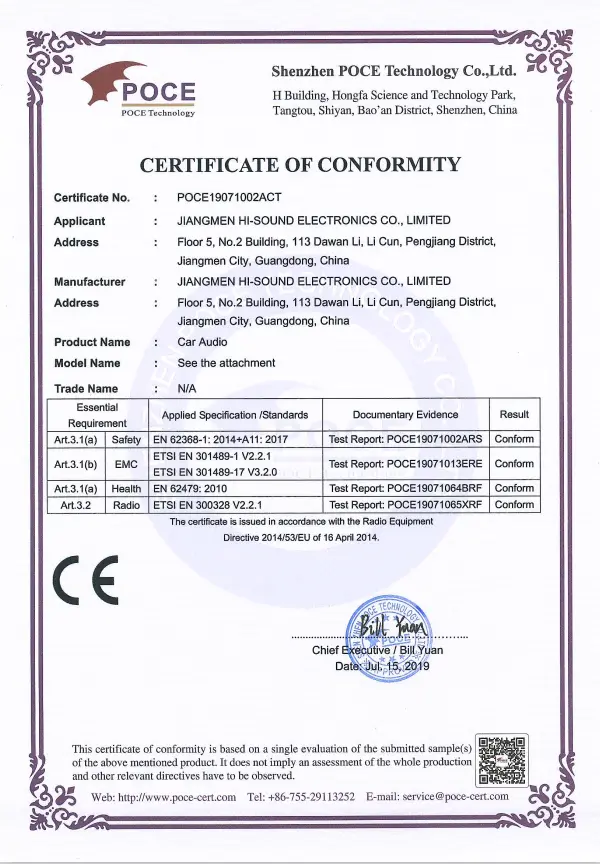
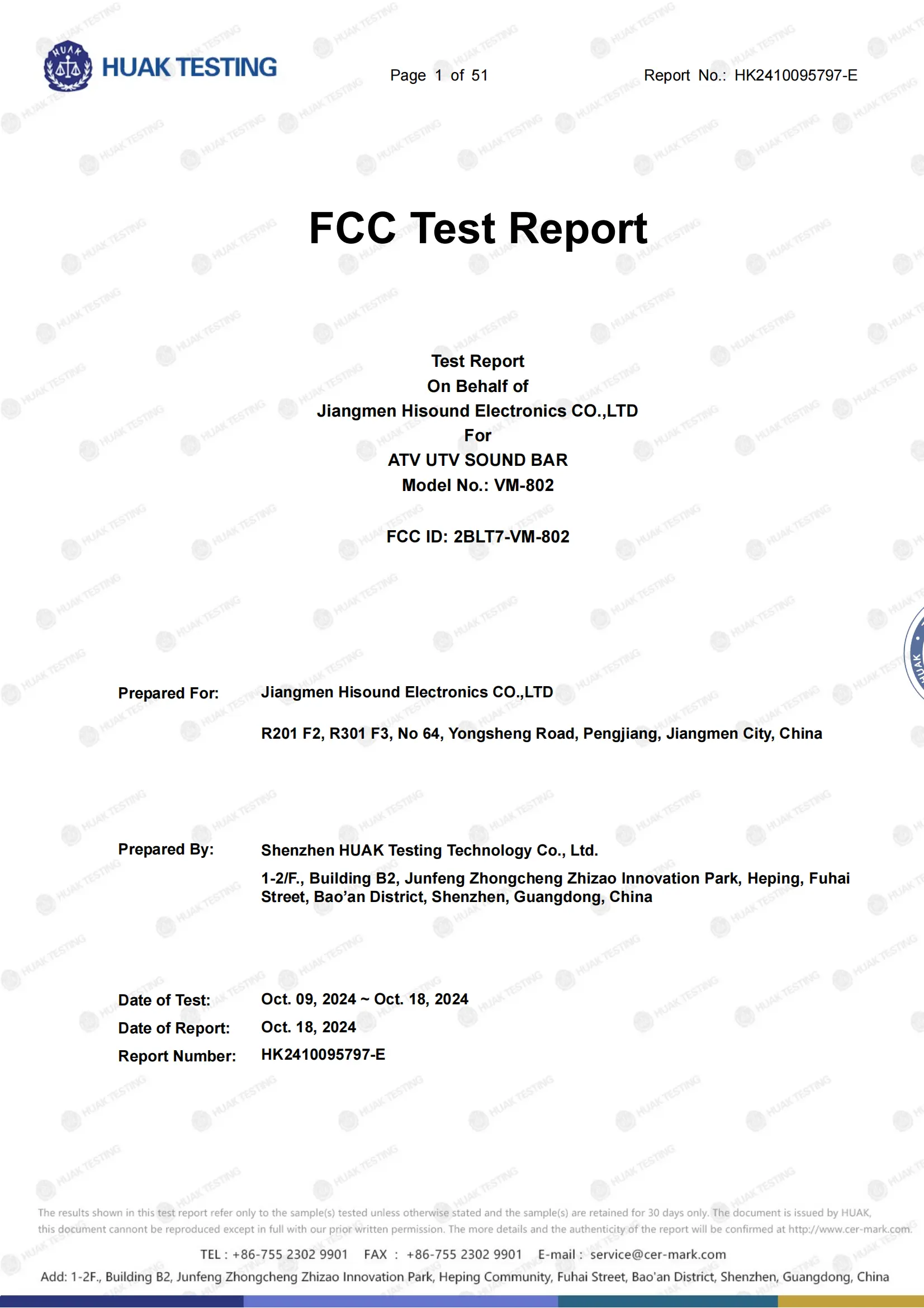
All systems validated through rigorous checks, holding CE, RoHS, ISO, and IPX8 certifications.
Demonstrating compliance with global automotive requirements to guarantee safe vehicle integration.

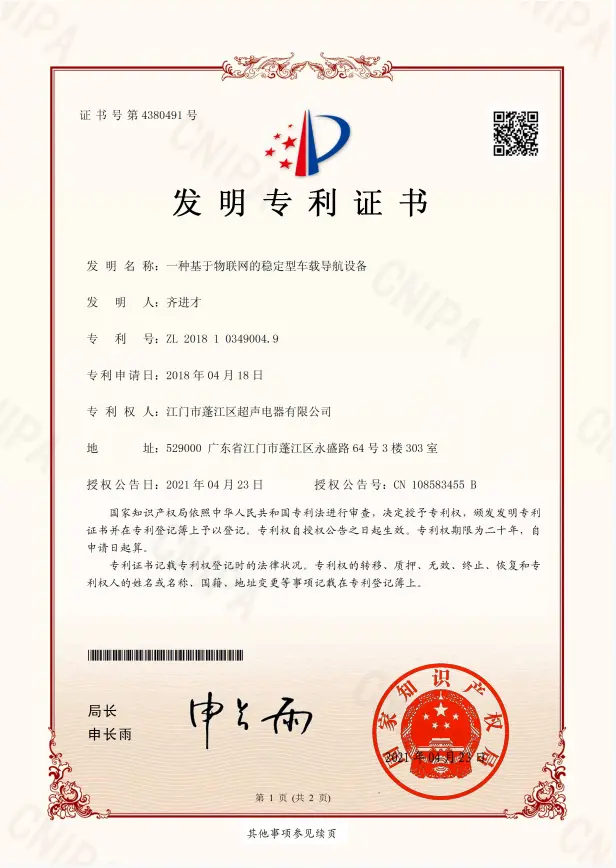

Our commitment is built on over four decades of focus, manufacturing consistency, and strong global partnerships.
Founded in 1979, our operations have evolved over 44 years. Today, we serve as an integrated provider specializing in technological development, brand management, and global supply logistics. In 2004, the REFINE Rui feng line was officially introduced to serve specialized aftermarket projects.
Our primary objective is to support partners through reliable relationships built on quality and consistency. We provide competitive wholesale pricing, optimized delivery times, and engineering support for both niche retailers and larger distributor networks.
Analyzing how custom-designed head units perform under specific local conditions.
Drivers in Mexico City face unique navigational challenges, including complex multilevel highways (such as the Segundo Piso del Periférico) and dense urban avenues that can obstruct GPS signals. Standard dashboard systems often suffer from positioning lag, leading to missed exits and routing errors. Our custom head units address this with tri-band location modules (combining GPS, GLONASS, and BeiDou) and an external active antenna. This hardware configuration ensures continuous tracking even in dense urban centers like Paseo de la Reforma or beneath heavy road structures.
Due to Mexico City's elevation of 2,240 meters, the thinner air reduces convective cooling efficiency for automotive electronics. Infotainment screens positioned behind vehicle windshields are also exposed to intense solar radiation, which can lead to system throttling or screen blackouts. Our systems address this with custom-engineered aluminum heat sinks and high-temperature thermal compound backings. This allows the internal processing chipsets to maintain stable temperatures and consistent performance, preventing lag during long driving periods.
For local taxi fleets and ride-hailing drivers, vehicle systems must handle continuous mapping, hands-free communications, and rearview safety inputs. Our 9-inch and 10-inch Android systems feature dual-zone audio capabilities, allowing navigation prompts to sound clearly while passenger entertainment continues uninterrupted. Additionally, the fast boot time (under 1.5 seconds from ignition) ensures that drivers have immediate access to their navigation and safety cameras as soon as they start the engine.
The automotive technology landscape is moving rapidly toward deeper vehicle integration. Our engineering roadmap includes the introduction of integrated ADAS (Advanced Driver Assistance Systems) warnings directly through the CarPlay interface, using high-definition lane tracking cameras. We are also preparing for 5G network transitions by optimizing internal RF antennas, ensuring that future retrofits remain compatible with cellular network upgrades. Additionally, we are expanding our custom CAN-bus libraries to support upcoming hybrid and electric vehicle models entering the Mexican market.
Answers to technical, logistics, and integration questions regarding deployment in the Mexican automotive aftermarket.
All imported car infotainment units must comply with Mexican official standards, specifically NOM-001-SCFI (safety requirements for electronic design) and NOM-208-SCFI (technical specifications for radio equipment using spread spectrum techniques). Our export models are pre-certified to meet these standards, ensuring smooth customs processing at major entry points like Veracruz or Manzanillo.
We supply vehicle-specific CAN-bus decoders and customized wiring harnesses for popular local models, including the Volkswagen Vento/Jetta, Nissan Versa/March, and Chevrolet Aveo. These decoders map analog and digital steering wheel button configurations directly to the Android OS, retaining factory system controls without requiring wire splicing.
While 2+32GB configurations are cost-effective options for standard retail needs, fleet operations running multiple foreground applications (such as real-time GPS routing, fleet logging, and DVR capture) require the larger memory of a 4+64GB system. The extra RAM prevents application crashes and provides the storage needed to cache map data locally, ensuring offline operation when mobile coverage is inconsistent.
Our motherboards are designed with a dedicated over-voltage protection circuit that shields internal components from input spikes up to 30V. In the event of a sudden voltage surge from the alternator, the protection circuit disconnects key components to prevent damage, returning to normal operation once the input voltage stabilizes.
We provide a complete range of OEM/ODM customization options. This includes tailoring startup logos, designing custom UI layouts, modifying physical mounting brackets for unique vehicle cabins, and providing custom retail packaging. Our engineering team works directly with your technical representatives to validate and test the designs prior to starting mass production.
Contact our sales engineering team today to receive a complete product catalog, detailed technical specifications, and bulk volume quotes customized for the Mexico City automotive market.
Send Inquiry Now Hisound carAudio